
Vibramycin
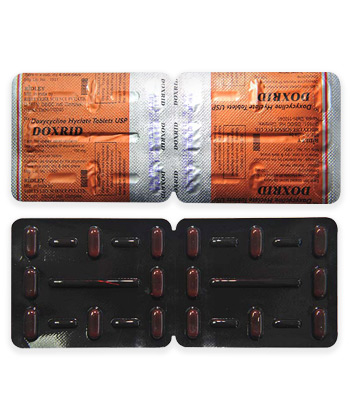
Vibramycin
- In our pharmacy you can buy vibramycin without a prescription, with delivery across Australia in 5–14 days and discreet, anonymous packaging available.
- Vibramycin (doxycycline) is used for acne, respiratory and urogenital infections, periodontitis, tick‑borne diseases (including Lyme), malaria prophylaxis, anthrax exposure and skin/soft tissue infections; it is a tetracycline antibiotic that inhibits bacterial protein synthesis by binding the 30S ribosomal subunit (primarily bacteriostatic).
- Usual dosages: commonly a 200 mg loading dose on day one then 100 mg daily maintenance; severe infections often 100 mg every 12 hours; acne 50–100 mg once daily (up to 12 weeks); malaria prophylaxis 100 mg daily starting 1–2 days before exposure and continuing for 4 weeks after leaving the area; paediatric dosing ~2.2 mg/kg every 12 hours (only for children >8 years in serious cases).
- Forms of administration: oral tablets and capsules (50 mg, 100 mg), powder for injection (single‑use IV vials), and occasional oral suspension.
- Onset time: orally absorbed rapidly with plasma levels rising within 1–2 hours; clinical improvement for infections is often seen within 24–72 hours.
- Duration of action: effective systemic activity typically lasts about 24 hours (half‑life ~18–22 hours), enabling once‑daily dosing in many cases (or twice daily for severe infections).
- Alcohol warning: avoid excessive alcohol while taking vibramycin — alcohol can worsen gastrointestinal side effects and increase strain on the liver; moderate intake should be discussed with your healthcare provider.
- The most common side effect is gastrointestinal upset (nausea, vomiting, diarrhoea); photosensitivity (increased sunburn risk), headache and mild liver enzyme elevations are also common.
- Would you like to try vibramycin without a prescription?


Basic Vibramycin Information
- INN (International Nonproprietary Name): Doxycycline.
- Brand Names Available In Australia: Doryx (Mayne Pharma) and multiple generics; Vibramycin appears in international product lists but Australian dispensing is mostly generic or locally branded.
- ATC Code: J01AA02 — Tetracyclines used systemically as broad‑spectrum antibacterials.
- Forms & Dosages: Tablets 100 mg and 50 mg in blisters or bottles, 100 mg capsules, powder for injection (100 mg vial) and rare oral suspensions (25 mg/5 ml).
- Manufacturers In Australia: Mayne Pharma (Doryx), Sandoz/Hexal AG, Mylan and other generic suppliers; Pfizer is the global originator.
- Registration Status In Australia: Prescription‑only product with Doryx listed for the Australian market; specific local registration documents not specified in the supplied data.
- OTC / Rx Classification: Rx Only (prescription‑only in the jurisdictions referenced).
Latest Research Highlights
Clinicians want to know whether doxycycline still earns a place in routine practice.
Recent Australian and international studies from 2022–2025 continue to support doxycycline as a versatile oral antibiotic with good oral bioavailability and strong tissue penetration.
Systematic reviews and meta‑analyses during this period reinforced that short‑course regimens of around seven to ten days are non‑inferior to longer courses for many community respiratory infections.
Observational Australian datasets report steady real‑world effectiveness for atypical pneumonia and community‑acquired tick‑borne illnesses when standard dosing is followed.
Safety signals in recent literature remain consistent with established product information, notably photosensitivity, gastrointestinal upset and rare hepatotoxicity.
Emerging research refined malaria prophylaxis timing and confirmed doxycycline’s role in post‑exposure anthrax scenarios as an effective oral option when indicated.
Australian pharmacovigilance reports to the TGA between 2022 and 2025 emphasise esophageal irritation and sun‑related dermatitis in outdoor workers, matching global safety observations.
A practical comparative outcomes table can help prescribers weigh efficacy by indication against adverse event rates and severity for counselling.
Clinical Effectiveness In Australia
General practice, telehealth and hospital clinicians commonly reach for doxycycline for community respiratory infections and tick‑borne disease in Australia.
National clinical pathways and PBS guidance list doxycycline among essential therapies, particularly for atypical pneumonia and certain tick‑borne infections.
Real‑world PBS claims and TGA adverse event reporting show consistent clinical outcomes when prescribers follow standard dosing such as a 200 mg loading day then 100 mg daily, or 100 mg twice daily for severe disease.
When pharmacists counsel patients on sun exposure and oesophageal precautions, adherence and tolerability improve in practice.
Brand presence locally includes Doryx and multiple generics supplied by Sandoz, Mylan and local manufacturers, with Vibramycin mainly noted as an international product name.
Rural versus urban outcome differentials relate mainly to access and treatment delays rather than intrinsic drug performance.
Practical primary care tips include confirming indication, advising a loading dose on day one when appropriate and reminding patients to avoid lying flat immediately after taking tablets to reduce oesophageal irritation.
Indications And Expanded Uses
Prescribers need clarity on TGA‑aligned uses versus commonly practised off‑label regimens.
TGA‑aligned and commonly recognised indications include acne vulgaris, bacterial respiratory tract infections (including atypical pathogens), urogenital infections such as chlamydia, periodontitis, skin and soft tissue infections and tick‑borne diseases.
International product matrices also list malaria prophylaxis and anthrax post‑exposure use as recognised indications.
Off‑label but commonly used approaches in Australian clinics include low‑dose longer courses for rosacea and adjunctive periodontal therapy, tailored by resistance patterns and specialist advice.
Pregnancy and breastfeeding are contraindications for routine use and children under eight are generally excluded except for life‑threatening situations.
In complicated cases such as prosthetic device infections, complicated Lyme disease or severe systemic illness, consultation with infectious diseases specialists is recommended.
Approved Versus Common Off‑Label Uses
| Indication | TGA‑Aligned Use | Typical Dosing/Duration |
|---|---|---|
| Acne Vulgaris | Yes | 50–100 mg daily up to 12 weeks |
| Atypical Respiratory Infection | Yes | 200 mg day 1 then 100 mg daily for 7–10 days |
| Chlamydia | Yes | 100 mg twice daily for 7 days (regimen varies by guideline) |
| Malaria Prophylaxis | Recognised Internationally | 100 mg daily starting 1–2 days before exposure, continue 4 weeks after return |
| Rosacea / Periodontal Adjunct | Off‑Label Use | Sub‑antimicrobial low doses or tailored courses per specialist |
Composition And Brand Landscape
Pharmacists should note that the active ingredient across brands is doxycycline, supplied as hyclate, hycline or monohydrate depending on manufacturer.
International trade names include Vibramycin (Pfizer originator), Doxy 100 in South Asia, Doryx in the US and Australia, and Doxyhexal in Europe.
The Australian market is dominated by generics and local brands with Mayne Pharma (Doryx), Sandoz/Hexal and Mylan among key suppliers noted in the data.
Globally doxycycline is sold as tablets (50 mg, 100 mg), capsules and occasional IV powder vials, with common packaging sizes from 10s up to 100 tablets per bottle.
Pharmacist note: generic substitution under PBS is common and differences in excipients or salt form should be checked against a patient’s allergy history.
Brand Matrix (Selected)
| Brand | Manufacturer | Common Strengths | Australian Availability |
|---|---|---|---|
| Vibramycin | Pfizer (originator) | 50 mg, 100 mg; tablets, capsules, IV | International listing; Australian dispensing mainly generics |
| Doryx | Mayne Pharma | 50 mg, 100 mg delayed‑release tablets | Available in Australia |
| Doxyhexal | Hexal AG / Sandoz | 100 mg tablets | International; generics available locally |
Contraindications And Special Precautions
Counselling must start with absolute contraindications before treating with doxycycline.
Absolute contraindications include known hypersensitivity to doxycycline or other tetracyclines, pregnancy, breastfeeding and routine use in children under eight years old.
Relative contraindications include severe hepatic impairment where liver function should be monitored, a history of significant photosensitivity reactions and conditions such as myasthenia gravis where muscle weakness may worsen.
Prior intracranial hypertension is also a cautionary history to note due to reported associations with tetracyclines and raised intracranial pressure.
For outdoor workers, farmers and some Indigenous communities with high sun exposure, explicit sun‑safety counselling is essential to reduce photosensitivity risk.
Practical daily‑life advice includes avoiding prolonged sun, staying upright for at least 30 minutes after swallowing tablets to reduce oesophageal irritation and storing the medicine at 15–30°C away from moisture.
Dosage Guidelines (Australian Practice)
Clear dosing instructions reduce errors and improve outcomes for common indications.
Typical adult dosing used in Australian general practice is an initial 200 mg on day one (either as 100 mg twice or a single 200 mg dose) followed by 100 mg daily for standard infections.
For more severe infections the common regimen is 100 mg every 12 hours.
Acne regimens are commonly 50–100 mg daily for up to 12 weeks depending on response and tolerability.
Malaria prophylaxis follows international practice with 100 mg daily starting 1–2 days before exposure and continuing for four weeks after leaving the endemic area.
Paediatric dosing when indicated (children over eight years) is approximately 2.2 mg/kg every 12 hours up to a maximum of 200 mg per day, usually reserved for severe or life‑threatening cases.
Renal adjustment is generally not required due to the drug’s non‑renal elimination, but caution is advised in severe hepatic dysfunction.
Common Dosing Table
| Indication | Initial Dose | Maintenance | Duration |
|---|---|---|---|
| Most Community Infections | 200 mg (day 1) | 100 mg daily | 7–10 days |
| Severe Infection | 200 mg (day 1) | 100 mg twice daily | As clinically indicated |
| Malaria Prophylaxis | Start 1–2 days before | 100 mg daily | Through exposure + 4 weeks |
| Acne | — | 50–100 mg daily | Up to 12 weeks |
Interactions Overview
Patients often ask what they must avoid when taking doxycycline and how to time other medicines.
Multivalent cations such as calcium, iron, magnesium and aluminium can chelate doxycycline and reduce absorption, so separate antacids or mineral supplements by two to three hours from dosing.
Although doxycycline is less affected than older tetracyclines, patients should still avoid taking tablets with milk or calcium‑rich supplements at the same time.
Concurrent use with retinoids such as isotretinoin or excessive vitamin A should be avoided because of a raised risk of intracranial hypertension.
Anticoagulants like warfarin may have altered effects while doxycycline is started or stopped, so INR monitoring is advised when co‑prescribing.
Medications containing bismuth, sucralfate or high‑dose antacids can reduce doxycycline efficacy and should be spaced apart as clinically appropriate.
Alcohol does not have a direct pharmacokinetic interaction but can worsen gastrointestinal side effects and increase photosensitivity risk.
Cultural Perceptions And Patient Habits In Australia
Understanding how patients access antibiotics helps pharmacists tailor counselling and supply advice.
Many Australians turn first to pharmacists for quick advice on antibiotics, with major chains such as Chemist Warehouse, Priceline and TerryWhite Chemmart being common contact points.
Telehealth and online pharmacies have increased doxycycline access through e‑prescriptions, especially among urban telehealth users.
Rural communities typically rely on local pharmacies and report occasional supply delays and greater sensitivity to cost.
Patient forums often highlight concerns about sun sensitivity and the risk of cosmetic tooth staining in children, which increases hesitancy in younger families.
Indigenous health services emphasise culturally appropriate counselling, particularly around pregnancy avoidance and antibiotic stewardship in remote clinics.
Price sensitivity means many patients prefer PBS‑subsidised generics or comparison shopping between outlets and chains for the best private price.
Pharmacists should offer simple written sun‑safety advice and dosing reminders for patients with low health literacy to support safe use in the community.
Availability And Pricing Patterns
Supply and subsidy details matter to patients deciding where to fill a prescription.
In Australia doxycycline is typically available as generics on the PBS and through major pharmacy chains and online pharmacies, with branded Doryx also stocked in some outlets.
PBS subsidy generally applies for appropriate indications, so patients usually pay the PBS co‑payment rather than the full private price for covered uses.
Private prices vary across chains and online sellers, and cost‑conscious consumers often compare outlets or opt for generics.
Rural supply can be affected by distribution delays and pharmacies commonly recommend ordering ahead or using mail‑order services from larger chains.
In our online pharmacy, vibramycin is available without a prescription, with discreet delivery to Australia in 5‑14 days.
Outlet Availability Table
| Outlet | Typical Supply Format | PBS Vs Private Notes |
|---|---|---|
| Major Chain Pharmacies | Generics 50 mg/100 mg tablets, branded Doryx | Often PBS‑listed supplies; private prices vary |
| Independent Pharmacies | Local generics, smaller packs | Can order in stock; price competitive |
| Online Pharmacies / Mail Order | Bottles 20–100 tablets; home delivery | Useful for rural delivery; private pricing often lower with bulk buys |
Comparable Medicines And Preferences
Clinicians choose alternatives when doxycycline is contraindicated or less suitable.
Minocycline is often favoured for acne due to its lipophilicity but carries risks such as dizziness and pigment changes.
Tetracycline is an older agent with narrower current use compared with doxycycline.
Macrolides like azithromycin and clarithromycin cover atypical pathogens and are options for penicillin allergy, though rising macrolide resistance and QT prolongation risks influence choice.
Doxycycline advantages include broad spectrum, excellent oral bioavailability and low cost as generics, while disadvantages include photosensitivity and contraindication in pregnancy and young children.
When tick‑borne illness or atypical pneumonia is suspected, doxycycline is often the first choice unless contraindicated.
Comparison Snapshot
| Agent | Key Indications | Advantages | Common Adverse Effects |
|---|---|---|---|
| Doxycycline | Atypicals, ticks, acne | Broad spectrum, good tissue penetration, inexpensive | Photosensitivity, GI upset |
| Minocycline | Acne | Effective for acne, lipophilic | Dizziness, pigmentation |
| Azithromycin | Atypicals, penicillin allergy | Once‑daily dosing, good atypical cover | GI upset, QT prolongation risk |
Frequently Asked Questions
- Can I take doxycycline with milk?
- Avoid taking doxycycline simultaneously with dairy or calcium supplements; separate doses by two to three hours to preserve absorption.
- Is doxycycline safe in pregnancy?
- No; doxycycline is contraindicated in pregnancy and breastfeeding because of fetal tooth and bone risks described in the product information.
- How long until it works for acne or chest infections?
- Respiratory infections often show improvement within 48–72 hours, while acne may need several weeks and up to 12 weeks for full effect.
- Can I drive or work in the sun?
- Driving is usually safe but be alert for dizziness; avoid prolonged sun exposure, use broad‑spectrum sunscreen and protective clothing when working outdoors.
Guidelines For Proper Use
Pharmacists should use a checklist to confirm safe dispensing and effective counselling.
- Confirm indication and patient age, and check pregnancy status as doxycycline is contraindicated in pregnancy and breastfeeding.
- Review concurrent medications for interactions with anticoagulants, retinoids, antacids and iron supplements.
- Advise dosing clearly: a common regimen is an initial 200 mg on day one then 100 mg daily, or 100 mg twice daily for more severe infections.
- Stress the importance of completing the full course even if symptoms improve early.
- Storage advice: store at room temperature 15–30°C and protect from moisture and light.
- Practical points: take with a full glass of water and remain upright for 30 minutes to avoid oesophageal irritation.
- Separate antacids and mineral supplements by two to three hours to preserve absorption.
- Sun protection: recommend broad‑spectrum SPF, wide‑brim hats and shade for outdoor workers and others at risk.
- Red flags: seek immediate medical attention for allergic reactions, severe diarrhoea, signs of jaundice or intense photosensitivity.
- Telehealth and rural dispensing: verify PBS eligibility for subsidy, supply printed or electronic information and arrange pharmacist follow‑up if symptoms persist beyond 48–72 hours.
Delivery Across Australia
| City | Region | Delivery Time |
|---|---|---|
| Sydney | New South Wales | 5–7 days |
| Melbourne | Victoria | 5–7 days |
| Brisbane | Queensland | 5–7 days |
| Perth | Western Australia | 5–7 days |
| Adelaide | South Australia | 5–7 days |
| Canberra | Australian Capital Territory | 5–7 days |
| Hobart | Tasmania | 5–7 days |
| Darwin | Northern Territory | 5–7 days |
| Gold Coast | Queensland | 5–9 days |
| Newcastle | New South Wales | 5–9 days |
| Wollongong | New South Wales | 5–9 days |
| Geelong | Victoria | 5–9 days |
| Townsville | Queensland | 5–9 days |
| Cairns | Queensland | 5–9 days |
| Ballarat | Victoria | 5–9 days |