
Diamox
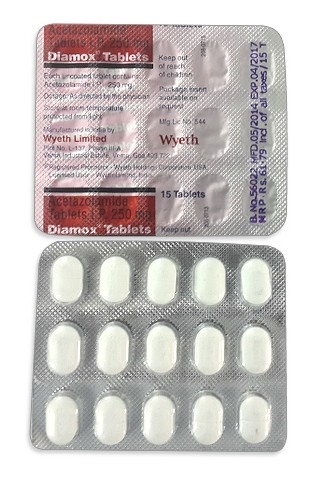
Diamox
- Diamox (acetazolamide) can be purchased from some pharmacies and online suppliers, and in Australia it is generally a prescription-only medicine. Availability without a prescription may vary by seller, but you should only obtain and use it in line with local laws and medical advice.
- Diamox is used for glaucoma, acute mountain sickness, certain types of epilepsy, and some forms of fluid retention (edema). It works as a carbonic anhydrase inhibitor, reducing fluid production in the eye, increasing bicarbonate and water loss by the kidneys, and causing mild metabolic acidosis that helps with altitude sickness.
- The usual dose depends on the condition: for glaucoma, 250–1000 mg per day in divided doses; for edema, 250–375 mg once daily; for epilepsy, 250–1000 mg per day; and for altitude sickness prevention, 125–250 mg twice daily or up to 500–1000 mg per day in some cases.
- Diamox is usually taken as oral tablets or extended-release capsules, and in some settings as an injection. The most common retail form is 250 mg tablets; extended-release capsules are also available in some markets.
- Diamox usually starts working within a few hours after an oral dose. For altitude sickness prevention, it is often started 24–48 hours before ascent so the full protective effect is in place.
- The duration of action is usually around 10–15 hours, which is why it is commonly taken 2–4 times daily depending on the formulation and indication.
- Do not drink alcohol while taking Diamox, as it can increase dizziness, drowsiness, dehydration, and the risk of side effects, especially at altitude or if you are already unwell.
- The most common side effects are tingling in the hands or feet, increased urination, fatigue, altered taste, nausea, and dizziness. It can also cause electrolyte imbalance and metabolic acidosis.
- Would you like to try Diamox without a prescription?



Basic Diamox Information
- INN (International Nonproprietary Name): acetazolamide
- Brand names available in Australia: Diamox is the best-known originator brand; Australian patients may also see generic acetazolamide on pharmacy systems and labels.
- ATC Code: S01EC01 when classified as an ophthalmological carbonic anhydrase inhibitor.
- Forms & dosages: tablets are the main retail form; internationally, 250 mg tablets are standard, with some extended-release capsules and hospital injection forms used in specialist settings.
- Manufacturers in Australia: not specified.
- Registration status in Australia: prescription medicine; access and use are generally specialist-led, especially for off-label indications.
- OTC / Rx classification: prescription only.
Australian searchers usually want one simple answer first: what does Diamox actually do, and is it the right medicine for them?
Diamox, or acetazolamide, is a prescription carbonic anhydrase inhibitor used mainly for glaucoma, some epilepsies, fluid retention in heart failure, and acute mountain sickness.
That mix of eye, kidney, brain and travel uses is why it comes up in ophthalmology, neurology, travel medicine and cardiology discussions.
In Australia, the practical rule is cautious prescribing with monitoring, especially when it is used off label or for short-term specialist purposes.
Pharmacists also tend to be a major safety checkpoint because Australians often ask for quick, plain-English advice before they travel or start a new prescription.
Latest Research Highlights: Australian And Global Evidence, 2022–2025
What has changed recently is not the core pharmacology, but how clinicians are using it and how carefully they are weighing risks against benefits.
Most of the newer evidence is international, but Australian practice follows the same pharmacology, the same need for electrolyte and kidney monitoring, and the same specialist oversight.
For glaucoma, acetazolamide remains a useful pressure-lowering option when eye pressure needs rapid reduction, often as an adjunct rather than a long-term standalone medicine.
For idiopathic intracranial hypertension, updated reviews from 2022–2024 continue to support acetazolamide as first-line pharmacotherapy, alongside weight management and monitoring of vision.
For altitude illness, newer reviews have pushed practice towards better-tolerated lower-dose prophylaxis, commonly 125 mg twice daily, with higher doses reserved for faster ascents.
In heart failure, the ADVOR trial has kept acetazolamide in the conversation as an add-on diuretic for hospitalised patients with volume overload.
Kidney stone risk has also been clarified, with newer cohort data reinforcing the need for hydration, risk screening and dose restraint.
Australian prescribers tend to separate established indications from emerging uses, which is exactly how this medicine should be viewed.
| Study Or Theme | Population | Key Finding | Practical Takeaway |
|---|---|---|---|
| Altitude sickness prophylaxis | Travellers and climbers | Lower-dose regimens remain effective and better tolerated. | Often started 24–48 hours before ascent. |
| ADVOR heart-failure discussion | Hospitalised patients with congestion | Acetazolamide can support decongestion with loop diuretics. | Adjunct use only, usually in hospital settings. |
| IIH guidance updates | Patients with raised intracranial pressure | Acetazolamide remains first-line medication therapy. | Useful when vision protection is the priority. |
| Kidney stone risk data | Longer-term systemic users | Stone risk is higher, especially at higher doses. | Monitor renal risk and encourage hydration. |
Clinical Effectiveness In Australia: What It Helps And Where It Works Best
Where does Diamox earn its keep in real Australian practice?
It is strongest when the goal is pressure reduction, not when the goal is a general-purpose everyday medicine.
In glaucoma, it is used when rapid intraocular pressure lowering is needed, particularly if topical treatment is not enough or surgery is being delayed.
In some epilepsies, it is used as an adjunct when standard antiseizure therapy has not fully controlled symptoms.
For fluid retention, it is usually a selective add-on rather than the first diuretic chosen for routine long-term heart failure management.
For altitude sickness prevention, Australians often seek Diamox before overseas trekking trips, expeditions or work travel at altitude.
Telehealth e-prescriptions can make pre-travel access easier, especially when the trip is booked late and there is not much time to organise medicine.
Effectiveness is often best when Diamox is used as part of a plan, not as a one-drug solution for everything.
That is why a pharmacist or doctor will usually ask what the diagnosis is, how urgent it is, and whether kidney function and electrolytes have been checked.
| Condition | Expected Benefit | Typical Setting | Who Usually Prescribes It In Australia |
|---|---|---|---|
| Glaucoma | Lower eye pressure | Urgent or adjunct treatment | Ophthalmologist |
| Epilepsy | Adjunct seizure control | Specialist-led therapy | Neurologist |
| Fluid retention | Extra diuresis in selected cases | Usually short-term or hospital-based | GP, physician or cardiologist |
| Altitude sickness | Prevention or symptom reduction | Pre-travel prophylaxis | Travel doctor or GP |
Approved Indications And Off-Label Use In Australian Clinics
The main approved uses are straightforward, but real-world practice often goes one step further under specialist supervision.
- Glaucoma
- Used to lower intraocular pressure, usually short term or as adjunct therapy when a rapid response is needed.
- Epilepsy
- Used as add-on treatment in selected seizure disorders, especially when standard options are not enough.
- Oedema / Fluid Retention
- Used for abnormal fluid retention in heart failure or drug-related oedema in carefully selected cases.
- Altitude Sickness
- Used to prevent or lessen acute mountain sickness, particularly before ascent.
- Off-Label Uses
- Idiopathic intracranial hypertension is the best-known off-label example in Australian and overseas specialist practice.
Diamox is not usually a first-line everyday medicine in general practice because it is prescription-only, situational and often used for a defined period rather than indefinitely.
Australian clinicians may refer to international product information, but prescribing still needs to stay TGA-aligned and follow local monitoring expectations.
That is the point where a pharmacist’s counselling makes a real difference, because people often hear the name from a specialist and then need help with the practical details.
Composition, INN And Australian Brand Landscape
Patients often ask whether Diamox and acetazolamide are the same thing, and the short answer is yes: Diamox is the brand, acetazolamide is the active ingredient.
The INN is acetazolamide, while Diamox is the originator brand and the name most patients remember.
In Australian retail and dispensing systems, generic naming is often more visible than brand loyalty, which suits price-sensitive patients and PBS-style decision making.
Pack labels can vary by sponsor, but the active ingredient remains acetazolamide.
Pharmacists and prescribers may still use the brand name casually, especially in specialist settings where the medicine is discussed by indication rather than by manufacturer.
| Name Used | What It Means | How An Australian Patient May Encounter It |
|---|---|---|
| Diamox | Originator brand | Heard from a specialist or travel doctor |
| Acetazolamide | Generic name | Seen on pharmacy labels and dispensing records |
| Diamox tablets | Common oral brand wording | Used in conversations about glaucoma or altitude sickness |
| Generic acetazolamide | Non-branded product | Likely the main dispensing format in Australia |
Pack formats internationally include 250 mg tablets and, in some markets, extended-release capsules.
Australian patients are more likely to see the INN name on the script and on the pack than a heavily branded presentation.
Contraindications And Special Precautions For Australian Patients
What makes pharmacists cautious with Diamox is not mystery, but predictable pharmacology.
Because it shifts acid-base balance and electrolytes, it needs care in people with kidney disease, liver disease or pre-existing low sodium or potassium.
Known sulfonamide hypersensitivity is a major issue, and adrenal insufficiency is another important red flag.
Pregnancy needs careful review, and the same goes for breastfeeding, because acetazolamide can cross the placenta and enter breast milk.
Older adults are more likely to be on multiple medicines, so interaction checks matter a lot.
People in hot climates, physically demanding jobs, rural areas or remote travel are at higher risk of dehydration and electrolyte imbalance, so hydration and follow-up planning matter.
| Situation | Advice | Practical Australian Note |
|---|---|---|
| Avoid use | Marked kidney disease, cirrhosis, severe acidosis, sulfonamide hypersensitivity | Needs prescriber review before dispensing |
| Use with caution | Mild renal or hepatic impairment, chronic respiratory disease | Specialist input is sensible |
| Monitor closely | Older adults, pregnancy, dehydration risk, multiple medicines | Pharmacist counselling is important |
Australian pharmacists are often trusted as the person who can say, plainly, “this is okay, but these are the warning signs”.
That trust is useful here because Diamox is one of those medicines that can be very helpful, but only when the right patient gets the right dose with the right monitoring.
Dosage Guidelines Used In Australia
How much Diamox is used depends on the reason it was prescribed, the formulation, the person’s kidney function and their age.
For glaucoma, adult dosing is commonly 250 to 1000 mg per day in divided doses, and some acute regimens use 250 mg every four hours or a 500 mg starting dose.
For oedema or fluid retention, a common starting dose is 250 to 375 mg once daily in the morning.
For epilepsy, adults are commonly dosed within the same broad 250 to 1000 mg per day range, split into doses.
For altitude sickness prevention, 500 to 1000 mg per day in divided doses is used, with prophylaxis started before ascent rather than after severe symptoms develop.
That timing matters because altitude sickness tablets work best when they are started 24 to 48 hours before going higher.
| Condition | Common Adult Dose | Timing | Key Monitoring |
|---|---|---|---|
| Glaucoma | 250 to 1000 mg daily | As directed | Eye pressure, adverse effects |
| Oedema | 250 to 375 mg once daily | Usually morning dosing | Fluid balance, electrolytes |
| Epilepsy | 250 to 1000 mg daily | Divided doses | Seizure control, tolerance |
| Altitude sickness prophylaxis | 500 to 1000 mg daily | Start 24 to 48 hours before ascent | Hydration, side effects |
- Children need weight-based dosing and specialist oversight.
- Older adults often need the lowest effective dose because renal clearance is important.
- Renal impairment usually means dose reduction or avoidance.
- Liver disease can make the medicine unsuitable.
Because Diamox is renally cleared, Australian clinicians are careful about kidney function, acid-base balance and follow-up access.
Interactions Overview: Medicines, Food And Drink
The common interaction question is not usually about food.
It is more often about what else the patient is taking and whether dehydration is likely.
Alcohol can worsen dizziness and dehydration, which is why it is usually discouraged, especially at altitude or in hot weather.
High-dose aspirin or salicylates can be a problem, and other diuretics can increase electrolyte loss.
Medicines that affect potassium or sodium need a check, as do seizure medicines and drugs that can affect the kidneys.
People often buy over-the-counter products from major pharmacy chains and assume they are harmless, but combining them with a prescription medicine is exactly when pharmacist advice is useful.
- Alcohol: can worsen dizziness, drowsiness and dehydration.
- Caffeine / coffee: usually not a major issue, but hydration matters.
- Aspirin / salicylates: check high doses carefully.
- Diuretics: may increase fluid and electrolyte effects.
- Seizure medicines: interaction checks are sensible.
- Kidney-impacting medicines: use extra caution.
Food is generally not the main issue, but fluid intake is.
If the prescriber has not restricted fluids, patients are commonly advised to keep well hydrated and to report anything that suggests electrolyte trouble.
Cultural Perceptions And Patient Habits In Australia
Australian patients tend to be practical about medicines like Diamox.
They care about value, access, pharmacy advice and whether the script can be filled quickly.
That is one reason generic acetazolamide attracts attention: people want the medicine that works, without paying for branding they do not need.
PBS subsidies and e-scripts shape behaviour here, even when the medicine is being used for travel rather than chronic disease.
City patients may have quick access to specialists and larger pharmacy chains, while rural patients often rely on telehealth, mailed scripts and local stock checks.
Mountain travel is not an everyday Australian concern, but it still matters for overseas trekking, expeditions and some work or defence-related travel.
A patient in Sydney might ask about it before a Nepal climb, while someone in regional Queensland might need follow-up advice by phone because the nearest prescriber is hours away.
That is where Australians often ask the real question: “what does the pharmacist think?”
- Common questions: prescription need, dose timing, and side effects.
- Common worries: tingling, fatigue, dehydration and kidney problems.
- What helps: clear instructions, hydration advice and warning-sign counselling.
In our online pharmacy, Diamox is available without a prescription, with discreet delivery to Australia in 5-14 days.
That said, anyone starting it for a medical condition should still seek appropriate clinical advice, because the medicine itself does not change just because access is easier.
Availability And Pricing Patterns In Australia
How is Diamox usually sourced in Australia?
In practice, patients obtain it through Australian pharmacies and online dispensaries, with access shaped by PBS status, private pricing, sponsor availability and whether the store has stock on hand or must order it in.
That is why one pharmacy may have it ready quickly while another needs to place an order.
Generic acetazolamide is generally the value option, while brand recognition is stronger among prescribers than among patients.
Major chains such as Chemist Warehouse, Priceline and TerryWhite Chemmart are part of the usual Australian pharmacy landscape, and online pharmacies plus telehealth-linked fulfilment have made access more convenient.
Rural areas can face delays, so stock checks matter.
A patient usually cares about three things: out-of-pocket cost, speed of supply, and whether the pharmacist can answer questions confidently.
| Channel | Typical Access | Patient Advantage |
|---|---|---|
| Chemist Warehouse | Often strong ordering network | Useful for price-conscious shoppers |
| Priceline | Pharmacy and online support | Convenient for repeat customers |
| TerryWhite Chemmart | Community pharmacy access | Helpful pharmacist counselling |
| Online pharmacy | Home ordering and fulfilment | Fast comparison shopping and discreet supply |
Pricing is usually driven by whether the product is generic or branded, whether it is stocked locally, and whether the pharmacy must order it in.
For a medicine like Diamox, access logic matters more than flashy branding.
Comparable Medicines And When Australians May Prefer An Alternative
Diamox is useful, but it is not the universal answer.
For glaucoma, other eye medicines may be preferred depending on the clinical picture.
For migraine prevention, acetazolamide is niche, while topiramate and propranolol have better-established evidence.
For oedema, loop diuretics are often preferred when the goal is stronger fluid removal.
Australians usually prefer the simplest option with the lowest total cost and the fewest side effects, especially if it is PBS-covered.
| Medicine | Main Use | Why It May Be Preferred | Key Downside |
|---|---|---|---|
| Diamox | Glaucoma, altitude sickness, selected specialist uses | Specific carbonic anhydrase effect | Tingling, dehydration, stones |
| Topiramate | Migraine prevention | Better migraine evidence | Cognitive side effects |
| Propranolol | Migraine prevention | Established first-line option | Can worsen asthma or bradycardia |
| Loop diuretics | Oedema | Stronger fluid removal | Different side-effect profile |
Choice depends on diagnosis, urgency and comorbidities, not just on the name of the medicine.
That is why an eye specialist, neurologist, travel doctor or cardiologist may each choose something slightly different.
Frequently Asked Questions
What is Diamox used for in Australia?
It is used for glaucoma, selected epilepsies, fluid retention in heart failure or drug-related oedema, and prevention or treatment of acute mountain sickness.
Do I need a prescription to buy acetazolamide?
Yes, acetazolamide is a prescription medicine in Australia.
How long before altitude travel should I start it?
Usually 24 to 48 hours before ascent, as directed by your doctor.
What side effects mean I should call a doctor or pharmacist?
Severe rash, breathing problems, marked weakness, severe vomiting, confusion, or signs of dehydration or electrolyte problems need prompt review.
For minor concerns such as tingling or taste changes, a pharmacist is usually the best first contact.
Guidelines For Proper Use And Pharmacist Counselling In Australia
What does good counselling look like for Diamox?
It starts with simple instructions and ends with clear warning signs.
Australians usually want no-nonsense advice, not a lecture, and that suits this medicine well.
Most counselling points are practical: take it as prescribed, do not self-adjust the dose, keep up fluids unless told otherwise, and report anything severe.
Common effects such as tingling, fatigue or altered taste are often manageable, but they still deserve a mention so the patient is not surprised.
Missed doses should generally be handled by taking the medicine when remembered unless it is close to the next dose.
Telehealth-linked e-prescriptions and remote dispensing are especially relevant if the patient lives far from the prescriber.
- When to take it: as prescribed, often with fluid and sometimes with food if stomach upset occurs.
- What side effects to expect: tingling, more urination, fatigue, taste changes.
- When to seek help: severe rash, breathing issues, confusion, marked dehydration or weakness.
- How to store it: in the original pack, away from heat and moisture.
- What to do if a dose is missed: take it when remembered unless the next dose is nearly due.
A quick pharmacist script is often enough: “Take it exactly as prescribed, keep hydrated, and call us or your doctor if anything feels more than mildly annoying.”
Delivery Across Australia
| City | Region | Delivery time |
|---|---|---|
| Sydney | New South Wales | 5-7 days |
| Melbourne | Victoria | 5-7 days |
| Brisbane | Queensland | 5-7 days |
| Perth | Western Australia | 5-7 days |
| Adelaide | South Australia | 5-7 days |
| Canberra | Australian Capital Territory | 5-7 days |
| Hobart | Tasmania | 5-7 days |
| Darwin | Northern Territory | 5-7 days |
| Gold Coast | Queensland | 5-7 days |
| Newcastle | New South Wales | 5-7 days |
| Wollongong | New South Wales | 5-9 days |
| Geelong | Victoria | 5-9 days |
| Townsville | Queensland | 5-9 days |
| Sunshine Coast | Queensland | 5-9 days |
| Ballarat | Victoria | 5-9 days |
Acetazolamide remains a useful, targeted medicine when the diagnosis is clear and the monitoring plan is sensible.
For Australian patients, that usually means getting the right prescriber, the right dose and the right counselling before the first tablet is taken.