Grifulvin
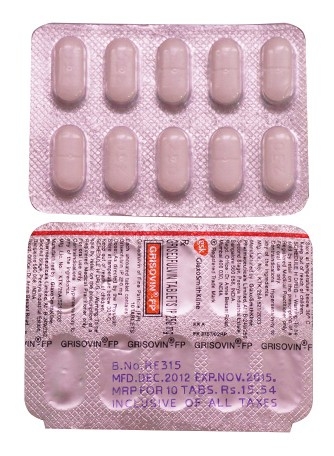
Grifulvin
- You can purchase grifulvin from pharmacies and online pharmacy stores in Australia and many other countries; it is usually a prescription-only medicine, although some pharmacies may offer access without a prescription depending on local rules and supplier policies.
- Grifulvin is used to treat fungal skin, scalp, and nail infections caused by dermatophytes. Its active ingredient is griseofulvin, which is fungistatic and works by disrupting the fungal mitotic spindle, stopping fungal cell division and helping new keratin grow resistant to infection.
- The usual dose depends on the infection and age: adults commonly take 500–1000 mg daily, while children usually take 10–20 mg/kg/day, up to a maximum of 1 g per day.
- It is taken by mouth as tablets or oral suspension. Common strengths include 125 mg, 250 mg, and 500 mg tablets, or 125 mg/5 mL liquid.
- Grifulvin usually starts working gradually, with improvement often seen within a few days, but visible clearing of the infection may take 1–2 weeks or longer depending on the site and severity.
- The duration of action is prolonged and treatment courses are typically 2–4 weeks for skin infections, 4–6 weeks for scalp ringworm, 4–8 weeks for foot infections, and 3–6 months for nail infections.
- Alcohol is best avoided or limited while taking grifulvin, as it may increase the risk of side effects such as dizziness, flushing, and stomach upset.
- The most common side effects are headache, nausea, vomiting, diarrhoea, fatigue, dizziness, and skin rash or photosensitivity.
- Would you like to try grifulvin without a prescription?
Latest Research Highlights On Griseofulvin In Australia And Globally
Basic Grifulvin Information
- INN (International Nonproprietary Name): Griseofulvin
- Brand Names Available In Australia: Not specified
- ATC Code: D01AA08
- Forms & Dosages: Tablets 125 mg, 250 mg, 500 mg; oral suspension 125 mg/5 mL
- Manufacturers In Australia: Not specified
- Registration Status In Australia: Prescription only medicine (Rx) under TGA oversight
- OTC / Rx Classification: Prescription only medicine (Rx)
Is griseofulvin still worth talking about when terbinafine and itraconazole dominate so many scripts?
Globally, the answer is yes, especially for dermatophyte infection where oral treatment is needed.
From 2022 to 2025, the most consistent evidence still supports griseofulvin as an established oral antifungal for tinea capitis, with the strongest long-standing role in children.
It works as a fungistatic antifungal by disrupting the fungal mitotic spindle, which stops cell division, and it builds up in keratin precursor cells to make the skin and hair less hospitable for dermatophytes.
Its spectrum remains narrow and practical: Trichophyton, Microsporum, and Epidermophyton.
That means it does not treat Candida, bacteria, or viruses, and it should only be used when the infection is truly a dermatophyte problem.
International prescribing has shifted, with many markets leaning towards newer oral antifungal treatment options, but griseofulvin still appears in paediatric ringworm care where oral therapy is needed.
| Evidence Snapshot | What The Data Shows |
|---|---|
| Efficacy In Tinea Capitis | Established role, particularly in children needing oral therapy |
| Safety Signals | Headache, GI upset, photosensitivity, dizziness, rare confusion or leukopenia |
| Prescribing Trends | Shifting towards terbinafine and itraconazole in many countries |
Data highlight: supply has shrunk in some countries, but paediatric use continues where oral treatment is necessary and culture results support a dermatophyte.
In Australia, griseofulvin sits under TGA oversight as a prescription medicine, and PBS considerations still matter when clinicians are choosing a practical, affordable option for families.
In selected cases, especially school-aged children with scalp ringworm or when Microsporum is suspected, doctors may still prefer griseofulvin because the clinical track record is strong and the counselling is straightforward.
Clinical Effectiveness In Australian Practice
What does griseofulvin actually look like in day-to-day Australian pharmacy use?
For many families, it is a PBS-conscious medicine used after GP review for tinea capitis treatment in school-aged children, especially when oral therapy is needed and the scalp infection is not settling with topical care alone.
That same script may arrive by telehealth when access is limited, which is increasingly common for busy parents in regional Australia.
Effectiveness depends on three basics: the organism must be a dermatophyte, the course needs to be long enough, and adherence must be good.
Australian pharmacists often remind people to take griseofulvin tablets with fatty food because absorption improves this way, which can make the difference between a sluggish response and a proper one.
For skin and nail disease, it is usually reserved for more severe or resistant cases, rather than routine first choice.
| Indication | Expected Response |
|---|---|
| Scalp | Good when used early for tinea capitis and taken for the full course |
| Body | Usually effective for tinea corporis if the organism is a dermatophyte |
| Feet | May help, but courses are longer and response can be slower |
| Nails | Less commonly used now, and longer treatment is needed |
In real-world Australian practice, the patient who improves is usually the one who keeps taking the oral antifungal, does not stop when the itch settles, and follows advice on food and follow-up.
Indications And Expanded Uses In Australian Clinics
Which fungal infections still justify griseofulvin?
The main indications are dermatophyte infections, with the strongest place in tinea capitis and a long history in other superficial ringworm infections.
Common clinical use includes tinea corporis, tinea cruris, tinea capitis, tinea pedis, and tinea unguium, with the course matched to the site and severity.
It is not effective for Candida or non-dermatophyte moulds, so a stubborn thrush problem is not a reason to reach for it.
Australian clinicians may still choose it in children with scalp ringworm where fungal culture suggests Microsporum, because the medicine has a long track record and remains familiar to dermatology and general practice teams.
Parents in regional Australia often appreciate a well-known medicine when the pharmacist can explain the course clearly and support the follow-up plan.
| Infection | Typical Dose Range | Treatment Length |
|---|---|---|
| Tinea corporis | 500 mg to 1000 mg daily in adults; 10 to 20 mg/kg/day in children | 2 to 4 weeks |
| Tinea cruris | 500 mg to 1000 mg daily in adults; 10 to 20 mg/kg/day in children | 2 to 4 weeks |
| Tinea capitis | 500 mg to 1000 mg daily in adults; 10 to 20 mg/kg/day in children | 4 to 6 weeks |
| Tinea pedis | 500 mg to 1000 mg daily in adults; 10 to 20 mg/kg/day in children | 4 to 8 weeks |
| Tinea unguium | 500 mg to 1000 mg daily in adults; 10 to 20 mg/kg/day in children | 3 to 6 months |
When the diagnosis is uncertain, culture and prescriber review matter more than the brand on the box.
Composition, Brands And Product Landscape
What is actually in the pack?
The active ingredient is griseofulvin, and the product landscape varies a lot by country.
International searches often turn up Grifulvin V, Gris-PEG, Fulvicin P/G, Griséofulvine, or Griseofulvina, but Australian patients may not always see the same brand familiarity because supply and naming differ by market.
Most e-pharmacy listings emphasise 250 mg tablets or 125 mg/5 mL liquid, and packaging is usually in blister strips, bottles for tablets, or syrup bottles for suspension.
Common strengths include 125 mg, 250 mg, and 500 mg tablets, plus oral suspension 125 mg/5 mL.
| Brand | Country Or Region | Formulation |
|---|---|---|
| Grifulvin V | US, others | Tablets and suspension |
| Gris-PEG | US | Tablets and suspension |
| Fulvicin P/G | Multiple markets | Tablets |
| Griséofulvine | France, Belgium | Tablets |
| Griseofulvina | Spain, Portugal, Latin America | Tablets |
Data highlight: tablets are generally easier to source than oral suspension, which can be harder to locate when stock is tight.
In Australia, pharmacists and online pharmacies are usually the practical touchpoints for finding stock, but TGA rules and prescription requirements still apply.
Contraindications, Precautions And At-Risk Groups
Who needs to be extra careful with this medicine?
Griseofulvin is not suitable for everyone, and the main safety checks matter in Australian prescribing just as much as anywhere else.
Absolute contraindications include allergy to griseofulvin or excipients, severe liver disease, porphyria, and pregnancy.
There is also a strong warning to avoid use in females who may become pregnant during treatment or within one month after treatment, because of teratogenic risk.
Relative cautions include lupus erythematosus, hepatic or severe renal impairment, and a history of hypersensitivity to penicillins.
Practical concerns also include dizziness that could affect driving or work safety, and photosensitivity that can make sun exposure uncomfortable.
Older adults may need closer monitoring of hepatic function.
| High-Risk Group | Why It Matters |
|---|---|
| Pregnant patients | Pregnancy is an absolute contraindication |
| People With Liver Disease | Severe liver disease is a contraindication; caution is needed in hepatic impairment |
| Children | Dose must be weight-based and not exceed 1 g daily |
| Aboriginal And Torres Strait Islander Patients | Follow-up may be affected by distance or service availability, so clear counselling matters |
In practice, the safest use is the simplest use: correct diagnosis, correct dose, and a proper review plan.
Dosage Guidelines And Treatment Duration
How much should be taken, and for how long?
For adults, typical dosing is 500 mg to 1000 mg daily for common skin infections.
For children, the standard dose is 10 to 20 mg/kg/day, with a maximum of 1 g daily.
Course length depends on the site of infection, and nails need the longest treatment.
No routine renal adjustment is listed, but hepatic caution is important.
| Indication | Adult Dose | Child Dose | Duration |
|---|---|---|---|
| Tinea corporis / cruris | 500 mg to 1000 mg daily | 10 to 20 mg/kg/day | 2 to 4 weeks |
| Tinea capitis | 500 mg to 1000 mg daily | 10 to 20 mg/kg/day | 4 to 6 weeks |
| Tinea pedis | 500 mg to 1000 mg daily | 10 to 20 mg/kg/day | 4 to 8 weeks |
| Tinea unguium | 500 mg to 1000 mg daily | 10 to 20 mg/kg/day | 3 to 6 months |
Data highlight: if a dose is missed, take it as soon as remembered unless the next dose is nearly due, and do not double up.
That advice sounds simple, but it is one of the easiest ways to avoid tummy upset and poor adherence.
Interactions With Food, Alcohol And Medicines
Can it be taken with food?
Yes, and that matters because absorption is improved with food, often fatty food, which is useful counselling for families who are trying to keep a child on track with treatment.
Griseofulvin may induce hepatic enzymes, which can reduce the effectiveness of oral contraceptives and warfarin.
That is why Australian pharmacists should screen concurrent medicines carefully, including scripts that arrive via e-prescriptions or telehealth.
Alcohol should be limited, and excess alcohol is best avoided because of liver stress and overlapping side effects.
| Interaction | Practical Advice |
|---|---|
| Food | Take with food, ideally fatty food, to improve absorption |
| Alcohol | Avoid excess alcohol because of liver and side-effect concerns |
| Warfarin | May reduce effect; monitoring may be needed |
| Oral contraceptives | May reduce effectiveness; extra contraception advice may be needed |
A quick medicines check can prevent a lot of trouble later.
Cultural Perceptions And Patient Habits In Australia
How do Australians usually shop for this medicine?
Price sensitivity is real, and people often compare options at Chemist Warehouse, Priceline, TerryWhite Chemmart, or a local community pharmacy before they commit.
Pharmacist advice is trusted, especially when the medicine is for a child and the family wants a clear plan.
Regional patients may rely more on mail-order or online pharmacies and can wait longer for stock.
Many people still search by brand as well as generic, especially if they have heard “Grisovin” from older relatives or from overseas websites.
Common behaviour includes:
- Asking about PBS subsidy before paying.
- Comparing pharmacy prices for tablets and suspension.
- Preferring telehealth repeat scripts when access is tight.
- Seeking quick relief for a family member with scalp ringworm.
In our online pharmacy, grifulvin is available without a prescription, with discreet delivery to Australia in 5-14 days.
That kind of access matters for busy families, but it is still wise to use the medicine only when it matches the diagnosis and the prescriber’s advice.
Availability, Pricing And Dispensing Patterns
Is griseofulvin easy to find?
Not always.
Availability can be inconsistent because some countries have shifted to newer antifungals, and shrinkage in supply has been reported in several markets.
Griseofulvin remains prescription only in major markets, and in Australia the practical reality is that a pharmacist may need to order stock, compare private pricing, or fill an e-prescription through an online pharmacy.
PBS listing may help for certain indications, but it should always be confirmed locally rather than assumed.
In-store pharmacy, online pharmacy, and mail-order services each have different fulfilment times, especially when supply is tight.
| Access Route | Typical Experience | Timing |
|---|---|---|
| In-store Pharmacy | Pharmacist may need to order stock | Varies by location |
| Online Pharmacy | Useful for valid e-prescriptions and price comparison | Depends on stock and address |
| Mail-Order | Helpful for regional customers | Often slower than metro pickup |
Data highlight: oral suspension can be harder to source than tablets, so families should ask the pharmacist early if liquid is needed.
Comparable Medicines And Patient Preferences
Why do many prescribers choose something else?
Terbinafine, itraconazole, fluconazole, and ketoconazole are the main competitors, and terbinafine is often preferred for many dermatophyte cases because it usually means a shorter course and broader modern use.
Griseofulvin still has a place in selected paediatric scalp infections, but it is no longer the automatic first choice for nail disease.
That makes sense when you compare supply, duration, and interaction burden.
| Medicine | Pros | Cons |
|---|---|---|
| Griseofulvin | Long track record, useful in paediatric scalp ringworm | Longer courses, absorption issues, more interaction checks |
| Terbinafine | Often shorter treatment, widely used | Not always the best fit for every organism |
| Itraconazole | Useful alternative in selected cases | Interaction burden and prescribing caution |
| Fluconazole | Alternative oral antifungal option | Not always preferred for dermatophytes |
| Ketoconazole | Historically used | Less used orally because of toxicity concerns |
If a nail infection is involved, a GP or dermatologist may switch to a different antifungal because treatment length and expected clearance matter so much.
Frequently Asked Questions For Australian Patients
- What is griseofulvin used for?
- It is used for dermatophyte infections such as tinea capitis, tinea corporis, tinea cruris, tinea pedis, and tinea unguium.
- How long does it take to work for scalp ringworm?
- Most courses run for 4 to 6 weeks, but adherence and the organism type affect the outcome.
- Can I drink alcohol while taking it?
- Excess alcohol should be avoided because of liver stress and overlapping side effects.
- Do I need a prescription in Australia?
- Yes, it is a prescription only medicine under TGA oversight.
Guidelines For Proper Use And Pharmacist Counselling
What should a patient remember before starting?
Take the medicine exactly as directed, because the best results come from steady use over the full course.
Australian pharmacists commonly advise taking griseofulvin with food, protecting the skin from sun exposure, and finishing the course even if the rash or scalp scale looks better.
Storage is straightforward: keep it at room temperature, protected from light and moisture.
If the oral suspension is supplied, shake it well, because liquid medicines settle.
Check the label carefully if the brand changes, and confirm with the pharmacist if there is any doubt about strength, timing, or stock substitution.
- Store at room temperature, away from light and moisture.
- Shake the suspension well before each dose.
- Take with food to improve absorption.
- Do not double a missed dose.
- Complete the full course, even if symptoms settle early.
- Use only with a valid prescription where required by law and local supply rules.
- Protect skin from sun exposure if photosensitivity occurs.
Data highlight: seek help from the GP for ongoing symptoms, the pharmacist for dosing or supply questions, and urgent care if severe rash, jaundice, confusion, or persistent vomiting appears.
Delivery Across Australia
| City | Region | Delivery time |
|---|---|---|
| Sydney | New South Wales | 5-7 days |
| Melbourne | Victoria | 5-7 days |
| Brisbane | Queensland | 5-7 days |
| Perth | Western Australia | 5-7 days |
| Adelaide | South Australia | 5-7 days |
| Canberra | Australian Capital Territory | 5-7 days |
| Hobart | Tasmania | 5-7 days |
| Darwin | Northern Territory | 5-7 days |
| Gold Coast | Queensland | 5-7 days |
| Newcastle | New South Wales | 5-7 days |
| Wollongong | New South Wales | 5-9 days |
| Townsville | Queensland | 5-9 days |
| Geelong | Victoria | 5-9 days |
| Ballarat | Victoria | 5-9 days |
| Bendigo | Victoria | 5-9 days |