
Colofac
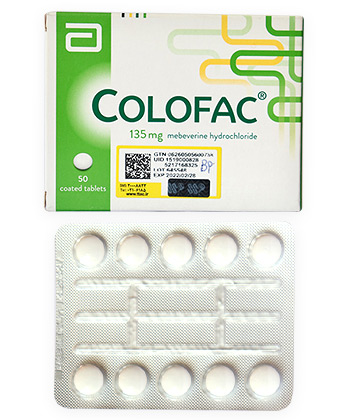
Colofac
- In many community pharmacies and online pharmacies you can buy Colofac; in some countries small packs are sold over‑the‑counter (no prescription/receipt required), but in Australia Colofac is generally prescription‑only so a script may be required for larger packs.
- Colofac (mebeverine) is used to relieve abdominal pain, cramps and bowel irregularity in irritable bowel syndrome (IBS) and other gut spasms; it is an antispasmodic that acts directly on intestinal smooth muscle to reduce spasm without prominent systemic anticholinergic effects.
- Usual adult dosage: 135 mg tablet three times daily, or 200 mg prolonged‑release capsule twice daily; not recommended for children under 10 years, and elderly usually use the standard adult dose unless advised otherwise.
- Administered orally as standard tablets (135 mg), prolonged‑release capsules (200 mg) or an oral liquid formulation for those with swallowing difficulties.
- Onset of symptom relief is typically within 30–60 minutes for immediate‑release formulations, though individual response can vary.
- Duration of action varies with formulation: immediate‑release dosing gives several hours of relief (hence three times daily), while the 200 mg prolonged‑release capsule is designed to provide symptom control for around 12 hours (twice‑daily dosing).
- Avoid excessive alcohol while being treated — alcohol can worsen gastrointestinal symptoms and may increase likelihood of side effects such as dizziness or drowsiness.
- The most common side effect is headache; other possible but less frequent effects include dizziness, gastrointestinal disturbances (diarrhoea or constipation) and allergic skin reactions.
- Would you like to try colofac without a prescription?



Basic Colofac Information
- INN (International Nonproprietary Name): Mebeverine.
- Brand Names Available In Australia: Colofac® — tablets 135 mg, blister packs of 30 or 500.
- ATC Code: A03AA04 — drugs for functional gastrointestinal disorders, specifically synthetic anticholinergics, esters with tertiary amino group.
- Forms & Dosages: Standard tablets 135 mg (one tablet three times daily); prolonged‑release capsules 200 mg (one capsule twice daily); oral liquid equivalent for swallowing difficulties.
- Manufacturers In Australia: Mylan Australia (originator brands supplied by Abbott/Mylan/Viatris and generics from multiple global manufacturers).
- Registration Status In Australia: Registered with the TGA as a prescription‑only medicine.
- OTC / Rx Classification: Prescription only in Australia, although Colofac is sold OTC in some EU/UK markets for small packs.
Latest Research Highlights
Patients often ask whether mebeverine actually helps gut cramps and pain.
Recent clinical literature from 2022 through mid‑2024 shows mixed but generally modest benefit for mebeverine in relieving abdominal pain and cramping in people with irritable bowel syndrome (IBS).
Systematic reviews and randomised controlled trials emphasise small‑to‑moderate symptom reductions versus placebo and heterogeneous endpoints across trials.
Authors repeatedly call for better‑powered trials with longer follow‑up and standardised outcome measures focussing on quality of life and work productivity rather than just short symptom scores.
Australian observational reporting and TGA adverse‑event summaries remain relatively sparse compared with more commonly prescribed IBS agents.
Safety signals are infrequent and mostly mild, typically including rash or dizziness.
Mechanistic work supports a peripheral smooth‑muscle relaxant action without systemic anticholinergic effects, which fits with tolerability in older patients and those with comorbidities.
| Study (Author / Year) | Outcome Summary (Population, Endpoint, Effect Size, Adverse Events) |
|---|---|
| Not Specified | Not specified — trials reported small‑to‑moderate symptom reductions versus placebo; endpoints and effect sizes vary across studies; adverse events generally rare and mild. |
| Australian Observational / TGA Summaries | Not specified — low reporting rates for serious events; common side effects reported include rash, dizziness, GI upset; no major safety signals documented. |
Clinical Effectiveness In Australia
Many patients want to know how well Colofac works in everyday practice here.
In Australia Colofac (mebeverine) is TGA‑registered as a prescription‑only medicine and local effectiveness evidence comes from small clinical trials, primary‑care audits and TGA adverse‑event summaries.
Real‑world practice suggests symptomatic relief of abdominal cramping and pain for a subgroup of patients with IBS.
Clinicians commonly advise a 2–8 week therapeutic trial and reassess benefits at about two weeks for early signs of response.
Mebeverine is not generally listed on the PBS as a widely subsidised medicine, so prescribers often weigh private cost against expected benefit for each patient.
TGA monitoring shows low reporting rates for serious adverse events and the most frequent side effects are uncommon and mild, such as rash or lightheadedness.
Within health services mebeverine is often positioned as a well‑tolerated antispasmodic option when first‑line dietary and lifestyle measures give partial relief.
Indications And Expanded Uses
Customers frequently ask what Colofac is approved to treat.
TGA‑registered indication is symptomatic relief of abdominal pain, cramps and bowel irregularity, primarily for IBS and non‑specific gut spasm.
Clinicians in Australia also prescribe mebeverine off‑label for functional gastrointestinal spasm where structural disease has been excluded, for example some post‑infectious IBS presentations.
Mebeverine is not appropriate for acute severe abdominal pain of unknown origin and obstructive or ischaemic causes must be ruled out first.
In paediatrics the medicine is generally not recommended for children under 10 years due to limited evidence.
For elderly patients and those with hepatic or renal impairment standard dosing is usually used with clinical caution and monitoring.
- Approved: Symptomatic relief of abdominal pain, cramps and bowel irregularity in IBS and gut spasm.
- Common Off‑Label Uses: Functional GI spasms, selected post‑infectious IBS cases where structural disease is excluded.
- Not For: Acute severe abdominal pain of unknown cause, suspected obstruction or ischaemia, children under 10 years (generally).
Composition And Brand Landscape
People shopping for a product want to know what’s inside and who supplies it.
The active ingredient is mebeverine, International Nonproprietary Name (INN) mebeverine, ATC A03AA04.
In Australia and New Zealand the dominant brand is Colofac® supplied by Mylan Australia and sold as 135 mg tablets in blister packs of 30 or 500.
Worldwide there are alternative brandings such as Duspatalin® in France and a range of generics from Abbott, Teva, Zentiva and other manufacturers.
| Form | Strength | Typical Dosing |
|---|---|---|
| Standard Tablet | 135 mg | One tablet three times daily. |
| Prolonged‑Release Capsule | 200 mg | One capsule twice daily. |
| Oral Liquid | Equivalent | For swallowing difficulties. |
Packaging and supply chains matter in Australia, so pharmacists will often note pack sizes and manufacturer when arranging private supply or parallel imports.
Contraindications And Special Precautions
Some patients need to know when Colofac must be avoided.
Absolute contraindications include hypersensitivity to mebeverine or any excipients and known paralytic ileus.
Certain formulations are contraindicated in hereditary galactose intolerance, Lapp lactase deficiency or glucose‑galactose malabsorption.
Relative precautions include severe hepatic or renal impairment where data are limited, and acute porphyrias where safety is unknown.
Pregnancy data are insufficient, so use is generally avoided unless a clinician judges benefits to outweigh risks.
Breastfeeding is generally discouraged because mebeverine is present at low levels in milk; clinical judgement is advised.
In elderly patients assess polypharmacy and fall risk because dizziness is a reported, though rare, adverse effect.
When caring for Indigenous or remote patients consider higher comorbidity burden and limited follow‑up access; monitor liver disease prevalence when prescribing.
- Absolute Contraindications: Hypersensitivity to mebeverine or excipients; paralytic ileus; hereditary galactose intolerance (certain formulations).
- Use With Caution: Severe hepatic/renal impairment; acute porphyrias; pregnancy and breastfeeding unless necessary.
- When To Stop And Review: New severe abdominal pain, fever, jaundice, or signs of an allergic reaction.
Dosage Guidelines (Australian Practice)
People commonly ask how to start and how long to try it for.
Standard adult dosing in Australia is 135 mg tablet three times daily or 200 mg modified‑release capsule twice daily.
Begin with a therapeutic trial typically lasting 2–8 weeks and assess symptom relief after about two weeks.
If there is no meaningful benefit at two weeks consider reviewing diagnosis and alternative therapies.
Children under 10 years: generally not recommended due to lack of established safety and efficacy.
Elderly patients usually receive standard adult dosing but monitor for adverse effects and interactions with other medicines.
Hepatic and renal impairment have no formal dose adjustment recommendations in product literature, but use clinical caution for severe impairment.
Missed dose advice: take as soon as remembered unless it is almost time for the next dose, and do not double up.
Overdose is rarely serious and is managed with symptomatic treatment and medical review if severe features develop.
| Dose | Frequency | Special Notes |
|---|---|---|
| 135 mg | Three times daily | Standard adult tablet dosing. |
| 200 mg MR | Twice daily | Modified‑release option for twice‑daily dosing. |
| Oral Liquid | As directed | For swallowing difficulties; consult pharmacist for dose equivalence. |
Interactions Overview
Many customers ask whether Colofac interacts with their other medicines.
Mebeverine has relatively few clinically important drug interactions and no major cytochrome P450 liabilities are typically reported.
The drug is preferred where anticholinergic side‑effects are a concern because it does not display strong systemic antimuscarinic action.
Advise moderation of alcohol because it may worsen GI symptoms or increase dizziness.
Caution is sensible with other CNS‑active medicines if the patient reports somnolence or dizziness.
Very rare reports describe false‑positive amphetamine results on some urine drug screens, so confirmatory testing should be considered for unexpected positives.
- Likely Safe: Most common chronic medicines with no known significant interaction.
- Use With Caution: Other CNS depressants if dizziness or sedation occurs.
- Test Considerations: Possible false‑positive amphetamine urine screens; arrange confirmatory testing where appropriate.
Cultural Perceptions And Patient Habits In Australia
People often worry about stigma when discussing bowel symptoms.
Colofac occupies a pragmatic place in Australian patient experience as a non‑sedating, well‑tolerated antispasmodic for when lifestyle measures and OTC remedies are insufficient.
Online forums and pharmacy enquiries show price sensitivity and frequent searches for larger packs or generics.
Telehealth is commonly used for repeat prescriptions, particularly in rural and remote settings.
Indigenous and culturally diverse communities may prefer face‑to‑face counselling and value culturally safe, plain‑language advice about alarm features.
Rural access limits continuity for some patients, who often request longer supplies or use mail‑order services from urban pharmacies.
Urban shoppers commonly compare prices at chain pharmacies and online stores, while trust in pharmacist advice remains high across settings.
- Patient Conversation Prompts: "Tell me where the pain usually is, how often it happens, and whether anything makes it worse."
- Urban vs Rural Access: Urban — frequent price comparison and short turnaround; Rural — reliance on telehealth, mail order and larger pack sizes for continuity of supply.
Availability And Pricing Patterns
People frequently ask where to buy Colofac and how much it costs.
Colofac is supplied to Australian community pharmacies including major chains and independents, and it is commonly dispensed with an e‑script from telehealth providers.
Colofac tablets 135 mg are available in blister packs of 30 or 500; larger packs generally lower the unit cost but require an appropriate prescription.
The product is not widely listed on the PBS as a subsidised item, so most patients pay private prices and often compare chain discounting and online specials before buying.
Rural supply can be affected by stock carrying and logistics, prompting longer prescriptions or mail‑order from city pharmacies as common workarounds.
Our online pharmacy lists Colofac for private purchase, and colofac is available without a prescription, with discreet delivery to Australia in 5‑14 days.
| Retail Channel | Typical Private Price (Example) |
|---|---|
| Major Chain Pharmacy (In Store) | Varies by store and pack size; compare for best price. |
| Online Pharmacy (E‑script / Mail) | Often competitive; watch for delivery times and discreet packaging. |
| Independent Pharmacy | May hold larger packs or arrange special orders; pricing varies. |
Comparable Medicines And Preferences
Patients ask what else might work if Colofac is not effective.
Alternatives available in Australia include hyoscine butylbromide (Buscopan®), dicycloverine/dicyclomine (Bentyl®), alverine citrate (Spasmonal®) and non‑pharmacological options such as peppermint oil (Colpermin®) and dietary measures like low FODMAP.
| Molecule | Example Brand | Mechanism | Pros / Cons |
|---|---|---|---|
| Mebeverine | Colofac® | Smooth muscle relaxant | Fewer systemic anticholinergic effects; modest efficacy in some patients. |
| Hyoscine Butylbromide | Buscopan® | Antispasmodic | Effective for cramps but may cause dry mouth and blurred vision. |
| Peppermint Oil | Colpermin® | Smooth muscle relaxant | Evidence for IBS pain; can cause heartburn in some people. |
Choice depends on symptom phenotype, comorbidities and patient preference.
Pharmacists should present a pros and cons checklist and recommend a 2–8 week trial for most antispasmodic options to judge benefit.
FAQ
Here are short answers to common questions people ask at the counter.
- Is Colofac available on the PBS? Typically not broadly PBS‑listed; check the current PBS schedule at the time of prescribing and expect variable private costs.
- How long before I know it’s working? A 2–8 week trial is common, with review around two weeks to check early response.
- Can I drive while taking Colofac? Most people tolerate mebeverine without sedation, but rare dizziness or visual disturbance means caution until you know how it affects you.
- Is it safe in pregnancy or breastfeeding? Data are limited; avoid unless the prescriber judges benefits outweigh risks.
Guidelines For Proper Use And Pharmacist Counselling
Pharmacists should use a patient‑centred approach when counselling on Colofac.
Confirm the diagnosis and ensure alarm signs have been ruled out before recommending an antispasmodic.
Explain that mebeverine is a smooth‑muscle relaxant with minimal systemic anticholinergic effects and outline the dosing options: 135 mg three times daily or 200 mg MR twice daily.
Set expectations for a 2–8 week trial and agree a review plan, commonly at two weeks.
Advise on storage: keep in original blister packaging below 25°C and out of reach of children.
Provide missed‑dose instructions: take as soon as remembered unless it is nearly time for the next dose and do not double up.
Discuss common side effects, which are uncommon but include rash, dizziness and GI changes, and explain when to seek urgent care for severe abdominal pain, fever, persistent vomiting or jaundice.
For rural patients arrange follow‑up by telehealth, consider longer supplies or mail‑order options, and discuss pack sizes and generics with price‑sensitive patients.
Document counselling in the dispense record and liaise with the prescriber if there is no improvement after the trial period.
- Counselling Checklist: Confirm diagnosis, review medicines, explain dosing, set trial duration, warn about side effects, advise when to stop.
Delivery Across Australia
| City | Region | Delivery Time |
|---|---|---|
| Sydney | New South Wales | 5-7 days |
| Melbourne | Victoria | 5-7 days |
| Brisbane | Queensland | 5-7 days |
| Perth | Western Australia | 5-7 days |
| Adelaide | South Australia | 5-7 days |
| Canberra | Australian Capital Territory | 5-7 days |
| Hobart | Tasmania | 5-7 days |
| Darwin | Northern Territory | 5-7 days |
| Gold Coast | Queensland | 5-9 days |
| Newcastle | New South Wales | 5-9 days |
| Wollongong | New South Wales | 5-9 days |
| Geelong | Victoria | 5-9 days |
| Cairns | Queensland | 5-9 days |