
Amiloride
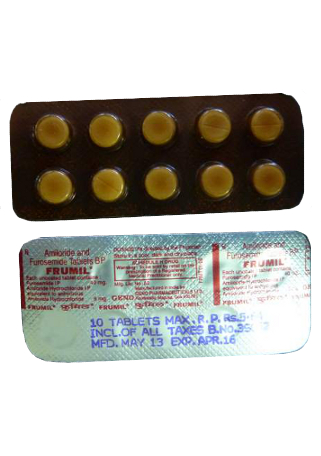
Amiloride
- In our pharmacy, you can buy amiloride without a prescription, with delivery in 5–14 days throughout Australia. Discreet and anonymous packaging.
- Amiloride is used to treat oedema, hypertension and to support management of congestive heart failure; it is a potassium‑sparing diuretic that blocks epithelial sodium channels (ENaC) in the distal nephron, reducing sodium reabsorption and potassium excretion.
- The usual dose for adults is 5–10 mg daily (some patients require 5–20 mg/day in divided doses); when combined with a thiazide diuretic therapy typically starts with 5 mg amiloride alongside the thiazide.
- Oral tablets (most commonly 5 mg; some markets also supply 10 mg); taken by mouth.
- Amiloride typically begins to take effect within 2–4 hours after an oral dose.
- The diuretic effect generally lasts about 24 hours after a single dose.
- Avoid excessive alcohol while taking amiloride — alcohol can increase dizziness, risk of dehydration and may worsen blood pressure effects; drink only in moderation and discuss with your clinician.
- The most common and clinically important side effect is hyperkalaemia (high potassium). Other common effects include nausea, vomiting, diarrhoea, headache, dizziness and muscle cramps; regular monitoring of serum potassium and renal function is recommended.
- Would you like to try “amiloride” without a prescription?

Basic Amiloride Information
- INN (International Nonproprietary Name): Amiloride.
- Brand Names Available In Australia: Midamor — 5 mg tablets, blister packs; manufacturer Aspen Pharmacare.
- ATC Code: C03DB01 (Potassium-sparing diuretics, plain).
- Forms & Dosages: Tablets most commonly 5 mg; some markets supply 10 mg tablets; combination products with thiazides exist.
- Manufacturers In Australia: Aspen Pharmacare (Midamor).
- Registration Status In Australia: Midamor approved and available, prescription only (TGA).
- OTC / Rx Classification: Prescription-only medicine (Australia: S4).
Latest Research Highlights
Worried about whether amiloride is still relevant in 2024 research?
Recent analyses from Australia and overseas (2022–2024) reaffirm the established pharmacology of amiloride as an ENaC blocker that reduces sodium reabsorption while sparing potassium.
Pharmacovigilance databases including TGA summaries and EU reports show the clearest safety signals are hyperkalaemia events, usually when amiloride is combined with renin–angiotensin system inhibitors or in patients with impaired renal function.
Randomised controlled trial evidence for amiloride as monotherapy for primary hypertension is limited compared with larger trials of other diuretics.
Small Australian observational cohorts show effective oedema control when amiloride is used alongside thiazides and a reduction in thiazide-induced hypokalaemia was commonly reported.
Emerging niche work in the 2020s explores topical and inhaled ENaC blockade for cystic fibrosis, but these routes remain investigational and are not TGA-approved for that use.
| Outcome | Findings |
|---|---|
| Efficacy (Oedema/Adjunct Hypertension) | Good when paired with thiazides; limited RCT monotherapy data. |
| Safety (Hyperkalaemia) | Most severe reports involve renal impairment or potassium‑raising co‑medications. |
| Emerging Uses | Topical/inhaled ENaC research ongoing but not approved in Australia. |
Data Highlight: severe adverse-event reports typically cluster in patients with reduced renal function or concurrent ACE inhibitor/ARB therapy.
Clinical Effectiveness In Australia
Patients often ask, "Will this help my swelling and not drop my potassium?"
In Australia, amiloride (Midamor) is an established S4 diuretic used for oedema and as adjunctive therapy in hypertension or heart failure when potassium sparing is desirable.
TGA product listings show Midamor as a registered product and TGA adverse-event reporting emphasises raised serum potassium and renal deterioration in susceptible people.
PBS coverage varies by indication and formulation, so prescribers and pharmacists check subsidy status before finalising scripts.
Real-world effectiveness in Australian practice mirrors international experience: it prevents thiazide-induced hypokalaemia and supports combination regimens, but it is not typically chosen as first-line monotherapy for uncomplicated hypertension.
- TGA Status: Registered product — Midamor available.
- PBS Status: Varies by indication and item number; check current PBS listings before dispensing.
| Indicator | Australian Outcome |
|---|---|
| Hospital Admissions For Hyperkalaemia (Diuretic Combos) | Higher when combined with ACEi/ARB and in renal impairment (pharmacovigilance signal). |
| Prevention Of Thiazide Hypokalaemia | Frequently effective in small observational cohorts. |
Indications And Expanded Uses
Patients ask whether amiloride is only for swelling or if it has other uses.
TGA‑labelled indications include oedema due to heart failure, cirrhosis or nephrotic syndrome, and adjunctive use in hypertension particularly to prevent thiazide-induced potassium loss.
Off‑label Australian practices sometimes use low‑dose amiloride as a potassium‑conserving measure in frail patients on multiple diuretics.
Investigational use includes inhaled or topical ENaC inhibition for cystic fibrosis research, but this is not an approved indication in Australia.
- Approved Uses: Oedema (heart failure, cirrhosis, nephrotic syndrome), adjunct in hypertension.
- Off‑Label Uses: Potassium conservation in polypharmacy, investigational inhaled/topical ENaC blockade (research only).
| Indication | Typical Starting Dose |
|---|---|
| Oedema/Adjunct Hypertension | 5–10 mg once daily |
| Congestive Heart Failure (titration) | 5 mg increasing to 5–20 mg/day in divided doses |
Composition And Brand Landscape
People often want to know what is in the tablet and who makes it in Australia.
The active ingredient is amiloride hydrochloride (INN: amiloride) with most Australian supplies in 5 mg tablets.
The main Australian brand is Midamor, supplied by Aspen Pharmacare in blister packs commonly of 30 or 50 tablets.
International generics include Teva, Ratiopharm and others in multiple markets.
| Brand | Strength(s) | Pack Sizes | Manufacturer |
|---|---|---|---|
| Midamor | 5 mg | 30, 50 tablets | Aspen Pharmacare (Australia) |
| Generic (example markets) | 5 mg, 10 mg (some markets) | 28–100 tablets (varies) | Teva, Ratiopharm, others |
- Excipients/Allergen Notes: Specific excipients vary by manufacturer; consult the product information or Australian Register of Therapeutic Goods for current details.
- Pharmacist Practical Note: Always check the ARTG and PBS item numbers before substitution.
Contraindications And Special Precautions
Who should not take amiloride is one of the first questions at the counter.
Absolute contraindications include anuria, acute or severe chronic renal impairment, Addison’s disease, known hypersensitivity to amiloride or excipients, and baseline hyperkalaemia above 5.5 mmol/L.
Relative risks include mild to moderate renal dysfunction, diabetes mellitus, the elderly and hepatic dysfunction — these patients need dose caution and close monitoring.
Pregnancy and breastfeeding data are limited so avoid unless benefits outweigh risks and specialist input is obtained.
- Absolute Contraindications: Anuria; severe renal impairment; high baseline potassium (>5.5 mmol/L); Addison’s disease; known hypersensitivity.
- Relative Precautions: Elderly, diabetics, hepatic impairment, concurrent potassium‑raising drugs.
Indigenous Health Note: Indigenous Australians have higher CKD prevalence and therefore higher risk of hyperkalaemia; use lower starting doses and tighter monitoring with culturally safe communication.
Daily‑life cautions include dizziness which may affect driving or operating machinery, and dehydration or heat exposure that increases renal risk for outdoor workers.
Dosage Guidelines
Patients commonly ask, "How much should I take and how often will blood tests be needed?"
Typical adult dosing: start 5 mg once daily with the option to increase to 10 mg or up to 20 mg/day in divided doses for severe oedema under monitoring.
In combination with thiazides, clinicians often use 5 mg amiloride with 25–50 mg hydrochlorothiazide to reduce potassium loss from the thiazide.
Children are not a routine group for amiloride and pedatric use should be specialist-led.
Elderly patients should start at 5 mg with renal checks and more conservative titration.
| Patient Group / Indication | Usual Starting Dose |
|---|---|
| Adult — Oedema/Adjunct Hypertension | 5 mg once daily |
| Heart Failure (titration) | 5 mg, may increase to 5–20 mg/day divided |
| Renal Impairment | Contraindicated in severe impairment; reduce dose and monitor if moderate impairment |
- Monitoring Schedule: baseline electrolytes and creatinine, then 1–2 weeks after initiation or dose change, then quarterly if stable.
- Trigger For Action: significant potassium rise, worsening renal function or symptoms such as muscle weakness — seek urgent review.
Interactions Overview
Many people worry about interactions that could raise potassium.
The main interaction concern is concurrent use with ACE inhibitors, ARBs, direct renin inhibitors, potassium supplements, trimethoprim, NSAIDs and other potassium‑sparing diuretics because they increase hyperkalaemia risk.
Co-prescribing with thiazide or loop diuretics is common to balance potassium effects but requires monitoring.
High‑potassium diets or salt substitutes containing potassium can augment the risk of hyperkalaemia.
| Drug / Class | Effect | Monitoring Advice |
|---|---|---|
| ACE Inhibitors / ARBs | Increase hyperkalaemia risk | Frequent potassium checks; consider dose adjustments |
| Potassium Supplements / Salt Substitutes | Raise serum potassium | Avoid or monitor closely |
| Trimethoprim | Can cause hyperkalaemia | Check potassium during co‑therapy |
| NSAIDs | May reduce renal perfusion and increase potassium | Warn patients about dehydration and consider alternatives |
- Pharmacist Checklist: Reconcile medicines at each supply, flag ACEi/ARB/NSAID combinations, and ensure up-to-date pathology is available.
Cultural Perceptions And Patient Habits
Common questions from patients include cost, monitoring access and whether the drug will make them feel weak from potassium changes.
Australian patients generally trust pharmacists for medicine advice and price sensitivity plus PBS reliance strongly influence adherence.
Urban prescribers often use targeted combination regimes; rural and remote communities face access gaps for pathology and monitoring despite e‑prescribing and delivery services helping with medicine access.
Indigenous Australians are more likely to have CKD and therefore contraindications; culturally safe shared decision‑making and involvement of Aboriginal Health Services are important.
- Rural Vs Urban Access: Rural patients may rely on telehealth and mail order for supply but need local phlebotomy for monitoring.
- Culturally Safe Tips: Use plain language, involve family or local Aboriginal Health Services, and document shared decisions and monitoring plans.
Availability And Pricing Patterns
Patients often ask where to buy amiloride and how much it will cost.
Midamor 5 mg is the main Australian product and is stocked across major chains — Chemist Warehouse, Priceline, TerryWhite Chemmart — and independent pharmacies.
Online pharmacies and telehealth prescriptions are common supply routes and private‑pay patients typically shop discount chains to save money.
PBS subsidy substantially lowers cost for concession card holders when the product and indication are PBS‑listed, so always check PBS listings and brand PBS status before dispensing.
In our online pharmacy, amiloride is available without a prescription, with discreet delivery to Australia in 5-14 days.
| Channel | Typical Pack | Notes |
|---|---|---|
| Pharmacy Chains | 30–50 tablets | Often competitive retail pricing; PBS scripts accepted where listed |
| Independent Pharmacies | 30 tablets | May hold limited stock; check reorder lead times |
| Online Pharmacy / Mail Order | 30–50 tablets | Useful for rural patients; ensure pathology access nearby |
- Pharmacy Stock Checklist: Confirm ARTG supplier, check PBS item numbers, record reorder times and advise patients on local monitoring paths.
Comparable Medicines And Preferences
Patients and prescribers often want to know what else can be used instead of amiloride.
Alternatives include triamterene (another ENaC blocker), and aldosterone antagonists such as spironolactone and eplerenone, as well as thiazide or loop diuretics depending on the clinical goal.
Amiloride’s benefit is predictable potassium conservation with fewer endocrine side effects compared with spironolactone, but it still carries hyperkalaemia risk and limited RCT monotherapy data.
Spironolactone has mortality benefit in heart failure with reduced ejection fraction but may cause hormonal side effects.
| Indication | Preferred Agent |
|---|---|
| Heart Failure (Mortality Benefit) | Spironolactone/eplerenone |
| Thiazide‑Induced Hypokalaemia | Amiloride |
| ENaC Alternative | Triamterene (availability varies) |
- Pros/Cons Checklist: Amiloride — pro: minimal endocrine effects; con: hyperkalaemia risk. Spironolactone — pro: mortality data in HF; con: endocrine adverse effects.
Frequently Asked Questions
Q: Will amiloride raise my potassium?
A: Yes, amiloride can raise potassium, especially when used with ACE inhibitors, ARBs, potassium supplements or in patients with reduced renal function; regular blood tests are required.
Q: Can I take it with an ACE inhibitor?
A: It is possible but requires close monitoring and a plan for frequent potassium checks agreed with the prescriber and pharmacist.
Q: Do I need a PBS script?
A: If the indication and product are PBS‑listed you will save cost; check with your prescriber and local pharmacy for current PBS status.
Q: What if I miss a dose?
A: Take as soon as remembered unless the next dose is due soon; do not double the dose.
- When To Seek Urgent Care: muscle weakness, palpitations, severe nausea or vomiting — present to emergency services immediately.
Guidelines For Proper Use
Pharmacists routinely ask patients about renal function and other medicines before supply.
Confirm baseline renal function and serum potassium prior to initiation and review interacting medicines such as ACEi/ARB/NSAIDs/potassium supplements.
Advise patients on symptoms of hyperkalaemia (muscle weakness, palpitations) and arrange baseline and follow‑up pathology at 1–2 weeks after start or dose change, then periodically if stable.
Storage: keep at 20–25°C and protect from moisture.
- Monitoring Timelines: Baseline electrolytes and creatinine; 1–2 weeks after start/change; then quarterly if stable.
- Missed Dose / Overdose: Follow standard single‑miss guidance; in overdose seek urgent medical attention for hyperkalaemia management.
Pharmacist Counselling Script Template: "This is amiloride 5 mg once daily as prescribed. Please book a blood test before you start, and another in 1 to 2 weeks. Avoid potassium supplements and salt substitutes unless discussed with your doctor. Report any muscle weakness or palpitations immediately."
For rural patients coordinate with local pathology services and arrange pharmacist‑led follow-up calls where required.
Delivery Across Australia
| City | Region | Delivery Time |
|---|---|---|
| Sydney | New South Wales | 5-7 days |
| Melbourne | Victoria | 5-7 days |
| Brisbane | Queensland | 5-7 days |
| Perth | Western Australia | 5-7 days |
| Adelaide | South Australia | 5-7 days |
| Hobart | Tasmania | 5-7 days |
| Canberra | Australian Capital Territory | 5-7 days |
| Darwin | Northern Territory | 5-9 days |
| Gold Coast | Queensland | 5-7 days |
| Newcastle | New South Wales | 5-7 days |
| Wollongong | New South Wales | 5-9 days |
| Geelong | Victoria | 5-9 days |
| Townsville | Queensland | 5-9 days |
| Bundaberg | Queensland | 5-9 days |