
Tinidazole
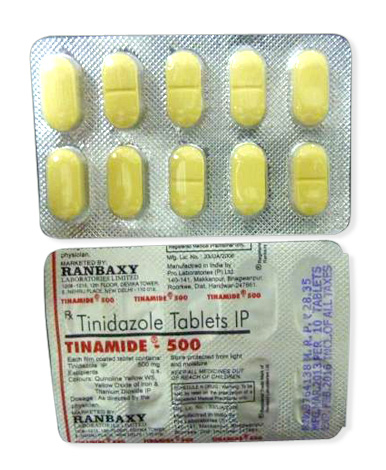
Tinidazole
- In our pharmacy, you can buy tinidazole without a prescription, with delivery available across Australia. It is also a prescription-only medicine in many countries, so use should follow local advice and medical guidance.
- Tinidazole is used to treat protozoal and certain bacterial infections, including trichomoniasis, giardiasis, amoebiasis, amebic liver abscess, and bacterial vaginosis. It works as a nitroimidazole antimicrobial, damaging the DNA of susceptible organisms and stopping them from growing.
- The usual adult dose depends on the infection: for trichomoniasis or giardiasis, 2 g as a single dose or 500 mg once or twice daily for 3–5 days; for intestinal amoebiasis, 2 g daily for 2–3 days; for amebic liver abscess, 1.5–2 g daily for 3–5 days; and for bacterial vaginosis, 2 g once or 1 g daily for 5 days.
- Tinidazole is usually taken as an oral tablet, and it is also available as an oral suspension in some markets. An intravenous infusion form is rarely used in hospital settings.
- Tinidazole typically starts working within a few hours, although symptom improvement may take 1–2 days depending on the infection and severity.
- The duration of action is long, which is why single-dose treatment is possible for some infections. For other conditions, treatment is usually given over 3–5 days.
- Do not drink alcohol during treatment and for at least 72 hours after the last dose, as tinidazole can cause a disulfiram-like reaction with flushing, nausea, vomiting, cramps, and palpitations.
- The most common side effects are nausea, a metallic or bitter taste, headache, dizziness, vomiting, and stomach upset. Some people may also notice dark urine or a skin rash.
- Would you like to try tinidazole without a prescription?







Latest Research Findings On Tinidazole In Australia And Globally
Basic Tinidazole Information
- INN (International Nonproprietary Name): Tinidazole
- Brand names available in Australia: Not specified
- ATC Code: P01AB02, J01XD02, G01AF21
- Forms & dosages: Tablet, oral suspension, infusion (rare)
- Manufacturers in Australia: Not specified
- Registration status in Australia: Prescription Only (Rx)
- OTC / Rx classification: Prescription Only (Rx)
What is the evidence actually saying about tinidazole right now?
Across international research, tinidazole continues to sit firmly in the nitroimidazole group as a well-established treatment for protozoal and some anaerobic infections.
Guidelines and trial data still support its use for giardiasis treatment, trichomoniasis treatment, amoebiasis, and bacterial vaginosis.
The practical advantage that keeps coming up is simple enough for patients to understand: shorter regimens can improve adherence, especially when compared with longer-course alternatives such as metronidazole.
That matters in Australian medicine evidence too, because the same real-world issue comes up in general practice, sexual health clinics, travel medicine, and pharmacy counselling.
There is no Australian-specific public PBS effectiveness dataset usually published at individual-drug level, so clinicians and pharmacists often rely on TGA-aligned prescribing practice, international trials, and pharmacy dispensing patterns.
For readers comparing options, the key point is that tinidazole has a stable research base, prescription-only status, and recognised WHO ATC classifications as an antiprotozoal and antibacterial medicine.
| Research Theme | What The Evidence Shows | Australian Relevance |
|---|---|---|
| Short-course therapy | Shorter regimens may support better adherence | Useful for time-sensitive treatment and follow-up |
| Protozoal infections | Supported for giardiasis, trichomoniasis, and amoebiasis | Common in returned traveller and sexual health care |
| Women’s health use | International guidance includes bacterial vaginosis | Often managed in GP and pharmacy-supported care pathways |
| Classification | WHO ATC codes P01AB02, J01XD02, G01AF21 | Matches recognised antimicrobial and antiparasitic use |
Data highlight: Tinidazole is prescription only worldwide, with WHO ATC classification codes P01AB02, J01XD02, and G01AF21, and its best-known advantage in studies is a shorter treatment course that may help people finish therapy properly.
How Tinidazole Is Used In Australian Clinical Practice
Where does tinidazole fit when an Australian patient actually needs treatment?
In day-to-day care, it is most often used for parasite-related diarrhoea, trichomoniasis, bacterial vaginosis, and amoebiasis in returned travellers.
Australian clinicians usually work from TGA-recognised prescribing principles, local antimicrobial guidance, and telehealth-linked e-prescriptions when access needs to be quick.
That is especially common when someone has symptoms before a weekend trip, before work travel, or after a positive test result from a sexual health clinic.
Pharmacists also see price-sensitive patients comparing chemist chains and online pharmacies, so practical counselling matters just as much as the prescription itself.
| Indication | Common Adult Dose | Usual Duration |
|---|---|---|
| Trichomoniasis | 2 g single dose or 500 mg twice daily | 5 days |
| Giardiasis | 2 g single dose or 500 mg daily | 3 to 5 days |
| Amebiasis | 2 g daily | 2 to 3 days |
| Amebic liver abscess | 1.5 to 2 g daily | 3 to 5 days |
| Bacterial vaginosis | 2 g single dose or 1 g daily | 5 days |
For many Australians, the short-course nature of tinidazole is attractive because it is easier to fit around work, family, and travel.
It also helps when a pharmacist is giving counselling on the same day the e-prescription arrives, because there is less room for missed doses and more urgency to start promptly.
PBS coverage may vary by indication, product availability, and private prescribing arrangements, so it is sensible to compare prices across major pharmacy networks and reputable online dispensaries.
Approved Indications And Off-Label Use In Australia
Which infections is tinidazole meant to treat, and when does a doctor step outside the familiar uses?
As an antiprotozoal and antibacterial agent, tinidazole is mainly used for trichomoniasis, giardiasis, intestinal amoebiasis, amebic liver abscess, and bacterial vaginosis.
Off-label use may occur when protozoal infection is persistent, resistant, or part of a combination approach, especially in travel medicine or infectious diseases care.
In Australia, that kind of prescribing is still prescription only, and clinicians may work through local sexual health, gastroenterology, infectious diseases, or women’s health protocols.
- Approved use
- Treating established indications such as trichomoniasis, giardiasis, amoebiasis, amebic liver abscess, and bacterial vaginosis.
- Off-label use
- Selected persistent or resistant protozoal infections, combination therapy, or situations where guideline-based alternatives are unsuitable.
Diagnostic confirmation is important wherever possible, particularly for sexually transmitted infections and recurrent vaginal symptoms.
That helps avoid unnecessary treatment and makes partner management, follow-up testing, and symptom review much more straightforward.
Tinidazole Brands, Forms, And Composition
People often ask whether tinidazole is the same medicine regardless of the brand.
The answer is yes at the active-ingredient level, but brand naming varies between countries and packaging systems.
The International Nonproprietary Name is tinidazole, while brand examples overseas include Tindamax, Fasigyn, Tinidazol, Tinidazole EG, Tinidazole Zentiva, and Haisigyn.
In local practice, patients may also see spelling variations such as Tinidazol, Tinidazolum, or Timidazole.
| Brand Name | Region | Common Strength |
|---|---|---|
| Tindamax | United States | 250 mg, 500 mg tablets |
| Fasigyn | United Kingdom and many others | 500 mg tablets |
| Tinidazol | Russia, Turkey | 500 mg tablets |
| Tinidazole EG | European Union | 500 mg tablets |
| Tinidazole Zentiva | Select European markets | 500 mg tablets |
| Haisigyn | Japan, China | Typically 500 mg tablets |
Available forms include 250 mg and 500 mg tablets, an oral suspension at 250 mg/5 mL, and a rare infusion presentation used in hospital settings.
Australian stock can be more limited than in the UK or US, so generic substitution or pharmacy ordering through supply networks may be needed.
Who Should Avoid Tinidazole: Contraindications And High-Risk Groups
Before a patient starts tinidazole, what safety issues need a proper check?
The main concern is not just allergy, but also pregnancy, neurological disease, liver function, and alcohol use.
Known hypersensitivity to tinidazole or other nitroimidazoles is an absolute contraindication, as is first trimester pregnancy and active CNS disease such as epilepsy or other organic neurological disorders.
Severe hepatic impairment, blood dyscrasias, and alcohol use need extra caution because of delayed elimination, blood monitoring concerns, and disulfiram-like reactions.
- Do not use if there is a known nitroimidazole allergy.
- Do not use in the first trimester of pregnancy.
- Do not use with active CNS disease such as epilepsy.
- Use extra caution with severe liver disease or blood dyscrasias.
- Avoid alcohol during treatment and for up to 72 hours after the last dose.
Older adults may need closer monitoring for liver or kidney issues, especially if other medicines are already in use.
In remote and Aboriginal and Torres Strait Islander communities, follow-up pathology may be harder to arrange, so clinicians often place more emphasis on clear instructions and practical safety netting.
Dizziness and fatigue can also affect driving, machinery use, road travel, and shift work, so patients should plan around that before taking the first dose.
Tinidazole Dosing Schedules And Dose Adjustments
How is tinidazole usually taken, and when does the schedule change?
For adults, the regimen depends on the infection, and many patients are given either a single dose or a short course lasting a few days.
| Condition | Adult Regimen | Notes |
|---|---|---|
| Trichomoniasis | 2 g once or 500 mg twice daily for 5 days | Treat partner as well |
| Giardiasis | 2 g once or 500 mg daily for 3 to 5 days | Useful for short-course treatment |
| Intestinal amebiasis | 2 g daily for 2 to 3 days | Follow local protocol |
| Amebic liver abscess | 1.5 to 2 g daily for 3 to 5 days | Needs clinical follow-up |
| Bacterial vaginosis | 2 g once or 1 g daily for 5 days | Choice depends on clinical context |
Children are usually dosed at 50 mg/kg orally, with a maximum of 2 g, either as a single dose or divided over 3 to 5 days depending on the protocol.
Elderly patients generally do not need routine dose adjustment unless comorbidities are present, but renal and hepatic function should still be considered.
In severe hepatic impairment, elimination may be delayed, so clinicians may consider a lower dose or a longer interval.
If a dose is missed, it should be taken as soon as remembered unless the next dose is close, and double dosing should be avoided.
Overdose may cause nausea, vomiting, ataxia, and seizures, which needs urgent medical review and supportive care.
Side Effects, Interactions, And Alcohol Restrictions
What should patients expect, and what is worth phoning the pharmacy about?
The most common problems are usually manageable, but they are important to explain clearly before treatment starts.
Mild to moderate side effects include nausea, metallic or bitter taste, vomiting, diarrhoea, abdominal pain, headache, dizziness, fatigue, rash, pruritus, and dark urine.
Some interactions may be flagged by eHealth systems or pharmacy software, but that does not replace a full medicine check.
Patients should always tell the pharmacist about every prescription, over-the-counter product, vitamin, herbal supplement, and occasional medicine.
Alcohol alert: Alcohol should be avoided during treatment and for up to 72 hours after the last dose.
That warning matters because a disulfiram-like reaction can happen.
Coffee is not a major direct interaction, although nausea can make caffeine feel less comfortable for some people while they are taking tinidazole.
If vomiting is severe enough that tablets cannot be kept down, the prescriber or pharmacist should be contacted promptly.
Cultural Perceptions And Patient Habits In Australia
Why do some Australians ask for the shortest possible course, while others want a lot of reassurance first?
The common pattern is simple.
People want convenience, low out-of-pocket cost, and clear pharmacist advice.
That is why pharmacists at Chemist Warehouse, Priceline, and TerryWhite Chemmart are often the first point of contact, especially when a telehealth prescription lands after hours.
| Urban Patients | Rural Patients |
|---|---|
| More stock choices and quicker same-day pickup | May rely on mail-order or local pharmacy supply |
| More likely to access nearby sexual health or travel clinics | Often need coordinated e-prescriptions and follow-up planning |
| Easier to compare prices across chains | Availability can matter more than brand choice |
Many Australians are cautious about “strong antibiotics”, so counselling should explain that tinidazole is being used for anti-protozoal or antibacterial purposes, not as a general catch-all antibiotic.
Short-course treatment often suits busy patients well, but only if the instructions are clear enough that the full course actually gets finished.
Availability, Pricing, And Pharmacy Access In Australia
How do people usually get tinidazole in Australia?
It is prescription only, so access is usually through a GP, sexual health clinic, travel clinic, or telehealth service when clinically appropriate.
Major pharmacy chains and online pharmacies are the usual dispensing points, although stock can vary because tinidazole is less commonly dispensed than metronidazole.
Internationally, the medicine is widely available as a generic, with suppliers such as Lupin, Edenbridge, Chartwell RX, Rising Pharma, Zentiva, Pfizer, and Mission Pharmacal listed in multiple markets.
In Australia, the patient may see either PBS-subsidised supply or private pricing depending on the indication and the script.
Substitution can depend on local brand availability, which is why a pharmacist may need to order stock rather than hand it over immediately.
Some patients prefer to arrange supply online when they want privacy and simple delivery, and in our online pharmacy, tinidazole is available without a prescription, with discreet delivery to Australia in 5 to 14 days.
| Access Channel | Benefit | Limitation |
|---|---|---|
| GP or clinic script | Best for diagnosis and follow-up | May take longer to organise |
| Telehealth e-prescription | Quick access when clinically appropriate | Needs correct assessment |
| Community pharmacy | Fast counselling and local support | Stock may vary |
| Online pharmacy | Convenient ordering and delivery | Delivery time depends on location |
Tinidazole Compared With Metronidazole, Secnidazole, And Ornidazole
Which nitroimidazole is the better option?
The answer depends on the infection, the price, the local guideline, and what the pharmacy has in stock.
Metronidazole is often cheaper and is first-line for many of the same infections.
Secnidazole gives another single-dose option, while ornidazole may be used in places where tinidazole is scarce.
| Medicine | Best For | Pros | Limits |
|---|---|---|---|
| Tinidazole | Short-course protozoal and vaginal infections | Shorter course, often better tolerated | Prescription only, stock may be limited |
| Metronidazole | Similar infections where cost matters | Often cheaper, widely known | Longer courses may affect adherence |
| Secnidazole | Single-dose therapy | Convenient dosing | May not suit every indication |
| Ornidazole | Alternative where available | Similar spectrum | Not always easy to source |
In Australian practice, the deciding factors are usually indication, cost, tolerability, local guideline preference, and pharmacy stock.
For many patients, the shorter course of tinidazole is the main reason it gets chosen over a longer nitroimidazole regimen.
Frequently Asked Questions About Tinidazole
Can I drink alcohol after tinidazole? No, alcohol should be avoided during treatment and for up to 72 hours after the last dose.
Is tinidazole available on the PBS? PBS coverage may vary by indication, product availability, and private prescribing arrangements, so the patient should check the dispensing price with the pharmacy.
Do I need to treat my partner for trichomoniasis? Yes, partner treatment is recommended for trichomoniasis so reinfection is less likely.
What if I miss a dose? Take it as soon as remembered unless the next dose is close, and do not double up.
Safe Use Guidance And Pharmacist Counselling Tips
What does good pharmacy advice sound like for tinidazole?
It is usually practical, not dramatic.
Take the medicine exactly as prescribed, and keep going for the full course even if symptoms improve quickly.
Pharmacists will often remind patients to avoid alcohol, report neurological symptoms such as severe dizziness or unusual unsteadiness, and seek help if vomiting means the medicine is not staying down.
Storage is straightforward: keep tablets at room temperature, between 15 and 30 degrees Celsius, away from moisture and light, and leave them in the original packaging until use.
Before supply, pharmacists may also check pregnancy status, liver disease, and current medicines to reduce avoidable risk.
Public health advice in Australia generally supports adherence, partner management where needed, and follow-up if symptoms persist after treatment.
When tinidazole is being used for a short, time-sensitive infection, that counselling can be the difference between one smooth course and a drawn-out repeat visit.
Delivery Across Australia
| City | Region | Delivery time |
|---|---|---|
| Sydney | New South Wales | 5-7 days |
| Melbourne | Victoria | 5-7 days |
| Brisbane | Queensland | 5-7 days |
| Perth | Western Australia | 5-7 days |
| Adelaide | South Australia | 5-7 days |
| Canberra | Australian Capital Territory | 5-7 days |
| Hobart | Tasmania | 5-7 days |
| Darwin | Northern Territory | 5-7 days |
| Gold Coast | Queensland | 5-7 days |
| Newcastle | New South Wales | 5-7 days |
| Wollongong | New South Wales | 5-9 days |
| Geelong | Victoria | 5-9 days |
| Townsville | Queensland | 5-9 days |
| Albury | New South Wales | 5-9 days |