
Orlistat
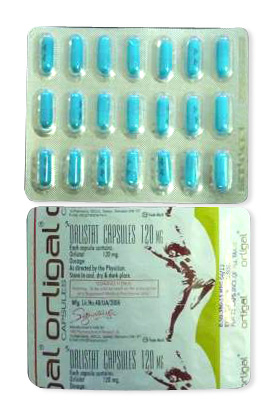
Orlistat
- In our pharmacy, you can buy orlistat without a prescription in many markets, with 60 mg capsules often available over the counter and 120 mg capsules usually prescription-only. Delivery is typically available in discreet packaging.
- Orlistat is used for weight loss and weight maintenance as part of a reduced-calorie, low-fat diet and lifestyle program. It works by blocking gastric and pancreatic lipases in the gut, which reduces the absorption of dietary fat.
- The usual dose is 120 mg three times daily with main meals for prescription use, or 60 mg three times daily with meals for the OTC strength.
- The form of administration is a hard gelatin capsule taken orally.
- Orlistat starts working after the first dose by reducing fat absorption during the meal, although noticeable weight-loss effects usually take several weeks.
- The duration of action is short and meal-related, lasting for the fat from that meal; it is typically used long term while treatment remains beneficial.
- Alcohol does not have a direct known interaction with orlistat, but heavy drinking may interfere with weight-loss goals and healthy eating, so it is best to limit alcohol.
- The most common side effects are oily spotting, flatulence, urgent or frequent bowel motions, fatty or oily stools, abdominal discomfort, diarrhoea, and abdominal cramps.
- Would you like to try orlistat without a prescription?


Basic Orlistat Information
- INN (International Nonproprietary Name): Orlistat
- Brand names available in Australia: Xenical, generic orlistat products; Alli is a recognised brand in some markets
- ATC code: A08AB01
- Forms & dosages: Capsule, 60 mg and 120 mg, oral
- Manufacturers in Australia: Roche, GlaxoSmithKline, and multiple generic suppliers
- Registration status in Australia: Approved supply depends on product, strength, and pharmacy stock
- OTC / Rx classification: 60 mg capsules are OTC in many regions; 120 mg capsules are prescription-only in most jurisdictions
Latest Research Highlights
Looking for a weight loss medicine that works in the gut rather than throughout the whole body?
That is the main reason people ask about orlistat, especially when they want a non-stimulant option.
Orlistat is a peripherally acting anti-obesity medicine, classified as ATC A08AB01, and it reduces fat absorption in the bowel instead of acting systemically.
That gut-acting profile is still the key point in the 2022 to 2025 evidence, because it explains both the benefits and the side effects.
Australian guidance and real-world pharmacy practice continue to place orlistat within a broader weight-management program rather than as a stand-alone fix.
In community pharmacy, patients are commonly reminded that food-linked dosing matters just as much as the capsule itself.
Across recent global trial and observational data, the overall pattern has stayed consistent: modest but clinically meaningful weight loss is achievable when orlistat is used with a reduced-calorie, lower-fat diet.
That benefit is strongest when people take it correctly with meals that contain fat, and weaker when doses are missed or meals are high in fat and energy.
In practical terms, the medicine does not replace diet planning.
It works alongside it.
| Outcome Area | What Recent Evidence Shows | Safety Observations |
|---|---|---|
| Weight loss | Modest but meaningful reductions when paired with a lower-fat, reduced-calorie diet | GI effects may limit adherence if meal fat is not restricted |
| Waist and metabolic risk | Supportive effects on waist circumference and cardiometabolic markers in responsive patients | Follow-up matters when weight loss is not clinically meaningful |
| Adherence | Effectiveness depends heavily on correct meal-linked dosing and persistence | Patients often stop early if oily stools or urgency are not anticipated |
| GI tolerance | Benefit is tied to reduced fat intake, which also lowers side effects | Common effects include oily spotting, fatty stool, urgency, and abdominal discomfort |
The research picture is not that orlistat is the strongest anti-obesity medicine on the market.
It is that it remains a useful gut-acting weight loss pill for the right patient.
In people who can stick to dietary advice, the anti-obesity drug outcomes are usually better than patients expect when they first hear “it only works if you take it with food”.
That is because meal fat content directly affects both efficacy and tolerability.
If a meal contains little or no fat, there is less reason to take the dose, and if the meal is high in fat, GI side effects are more likely.
Recent Xenical evidence also supports the familiar counselling message that the medicine works best as part of a structured plan, not as a shortcut.
For patients comparing orlistat research with newer options, the main trade-off is simple: orlistat generally offers more modest average weight loss than some newer therapies, but it avoids central stimulant effects and remains attractive for patients who prefer a non-systemic treatment.
That is why obesity medicine research still keeps orlistat on the list, especially for people who want a pharmacy-led approach with clear meal rules and predictable monitoring.
Clinical Effectiveness In Australia
How does orlistat fit into Australian obesity care when people are comparing pharmacy options, e-prescriptions, and private purchases?
In practice, it sits in the middle of the market.
Some Australians buy it privately, some receive it through pharmacist supply pathways, and some access it via prescription workflows depending on the product strength and local supply arrangement.
In Australia, 120 mg capsules are typically prescription-only, while 60 mg products may be available OTC in some markets, although availability depends on local regulatory and pharmacy supply arrangements.
PBS weight loss medicine coverage is not the usual pathway here, so most consumers think in terms of private purchase and out-of-pocket cost.
That is why many shoppers compare orlistat Australia options before they decide.
What should a patient realistically expect from Xenical for weight loss?
- Modest weight loss rather than dramatic early results.
- Better maintenance of weight loss when treatment is continued with diet and activity changes.
- Supportive changes in waist circumference and metabolic risk in people who respond well.
- GI side effects if meals are too high in fat.
- A need for follow-up if the first phase of treatment is not clinically meaningful.
Australian consumers often compare orlistat with faster-acting medicines.
That comparison is understandable, but it can lead to disappointment if expectations are too high.
Orlistat is not a quick fix.
It is best viewed as a supportive anti-obesity drug for people who are willing to work with a reduced-fat eating plan.
TGA-monitored safety information is part of the conversation, and follow-up is important if the person is not losing enough weight or cannot tolerate the gut effects.
In a real counselling scenario, a pharmacist may explain that if the first few weeks are full of oily stools because the diet is too high in fat, the problem is often the meal pattern rather than the capsule itself.
That practical food-and-dose link is what makes orlistat clinically effective for some patients and a poor fit for others.
| Access Pathway | What It Usually Means | Practical Note |
|---|---|---|
| Private purchase | Common for patients comparing brands and prices | Useful when prescription access is not the preferred route |
| Pharmacist supply | May suit people needing simple counselling and quick supply | Meal-linked dosing advice is usually reinforced at the counter |
| Prescription pathway | Common for 120 mg capsules and follow-up monitoring | Best when medicines, diabetes care, or comorbidities need review |
Indications And Expanded Uses
What is orlistat actually approved for, and when do clinicians stretch its use a little further?
The approved indication is straightforward: obesity and weight-loss maintenance as part of a reduced-calorie, moderately low-fat diet and a wider weight-management program.
The standard prescription dose is 120 mg three times daily with main meals.
In OTC-dose markets, 60 mg three times daily is the usual lower-strength option.
Its action stays in the gut, which helps separate it from centrally acting weight-loss drugs that work on appetite pathways in the brain.
- Approved use
- Treatment of obesity and support for weight-loss maintenance with diet and lifestyle change.
- Common off-label pattern
- Use in people who want a non-systemic option or who have cardiometabolic risk and need a pharmacist-led weight-management medicine.
- Clinician-led use only
- Any off-label weight loss plan should be guided by a health professional and monitored over time.
In Australian clinics, off-label weight loss discussions sometimes come up for patients who do not want stimulant effects, or who want a medicine that stays localised to the bowel.
That preference is common among people who have tried other approaches and want something simpler.
Orlistat capsules Australia searches often reflect that exact mindset.
A patient may say they are not chasing a “miracle”, just something that helps them stay on track when they are already eating better.
That is where orlistat can fit well.
Even then, success still depends on dietary fat restriction and regular follow-up.
If the food plan is not changed, the medicine has little to work with.
Composition And Brand Landscape
Are Xenical capsules and generic orlistat the same thing?
At the active-ingredient level, yes.
The INN is orlistat, and brand names vary by market, with Xenical and Alli being the best known internationally.
Generic orlistat products are also sold online and through pharmacies, and common synonyms include Orlap, Orlipastat, and Tetrahydrolipstatin.
Orlistat is typically supplied in hard gelatin capsules.
| Brand Or Form | Strength | Usual Pack Sizes | Notes |
|---|---|---|---|
| Xenical | 120 mg | 21, 42, 84, 90 | Prescription strength in most jurisdictions |
| Alli | 60 mg | 21, 42, 84, 90 | OTC strength in many markets |
| Generic orlistat | 60 mg or 120 mg | Varies by supplier | Availability depends on registration and stock |
In the Australian market, consumers commonly search for Xenical 120 mg or orlistat capsules Australia, then compare pharmacy chains and online options.
Roche is linked to Xenical, and GlaxoSmithKline is linked to Alli in global markets, while many generic suppliers also exist.
Pharmacies and e-shops may carry prescription and OTC branded or generic orlistat, but the local range can change with TGA registration and supplier stock.
For shoppers, the important practical point is that strength, brand, and supply source all affect what is actually available on the day.
Contraindications And Special Precautions
Who should avoid orlistat, and who needs closer monitoring?
The main answer is simple: anyone with a condition that could make gut fat absorption a problem, or anyone in a group where safety is not established, needs caution.
That includes people with chronic malabsorption syndromes, hypersensitivity to orlistat or excipients, pregnancy, and children under 12 years.
Pregnancy is a clear contraindication.
| Risk Group | Why It Matters | What To Watch For |
|---|---|---|
| Chronic malabsorption syndromes | Orlistat can worsen the problem | Usually avoid treatment |
| Pregnancy | Contraindicated | Use shared decision-making and avoid exposure |
| History of oxalate kidney stones | Risk may increase | Monitor symptoms and discuss hydration and risk |
| Diabetes | Medication needs may change as weight falls | Review glucose control and co-therapy |
| Thyroid disease | Hypothyroidism needs monitoring | Check symptoms and follow-up results |
| Ciclosporin use | May reduce ciclosporin efficacy | Monitor ciclosporin levels closely |
For people with diabetes, a medicine review matters because weight loss can change treatment needs over time.
For thyroid disease, clinicians watch for hypothyroidism.
For people with a kidney stone history, oxalate stones are the main concern.
Orlistat itself is not a stimulant, so it usually does not impair driving in the usual sense, but GI urgency can still affect commuting, workplace confidence, and daily routines away from toilets.
That can be a big issue for shift workers, tradies, teachers, and anyone who is on the road a lot.
In regional Australia, pharmacists are often the first point of advice, especially where a GP appointment is not immediate.
That is often where the most practical safety counselling happens.
Dosage Guidelines
What is the usual orlistat dose, and what should a patient do if a meal is missed?
For prescription use, the standard regimen is 120 mg three times daily with main meals.
Where OTC supply applies, 60 mg three times daily is the usual lower-strength option.
The dose should be taken with a meal only if the meal contains fat.
If a meal is missed, or the meal contains no fat, the dose should be skipped.
It should not be doubled.
| Situation | What To Do | Monitoring |
|---|---|---|
| Main meal with fat | Take the prescribed dose | Watch for GI effects if fat intake is high |
| Meal missed | Skip the dose | No extra capsule later |
| Meal has no fat | Skip the dose | Do not double up |
| Long-term use | Continue only while weight loss remains clinically meaningful | Review progress and diet plan |
Long-term weight management is common with orlistat when the medicine is still helping and the person is still losing or maintaining weight.
No routine elderly dose adjustment is generally required.
There are no formal recommendations for renal impairment, and hepatic impairment should be handled with caution because data are limited.
Children under 12 years are not recommended for treatment.
If diabetes therapy needs to change as weight falls, that review is usually made by the prescriber or treating team.
For many Australian patients, the biggest difference between a good response and a poor one is adherence to the meal rules.
Interactions Overview
Does a gut-acting medicine still have meaningful interactions?
Yes, it does.
Orlistat interactions are still important, even though the medicine is not absorbed in significant amounts systemically.
The main medicine interactions that matter in practice are ciclosporin, warfarin or vitamin K considerations, thyroid medicines, and diabetes medicines that may need review as body weight changes.
Those are the checks pharmacists look for when a script comes through, including e-prescriptions handled through community pharmacy and telehealth workflows.
| Interaction | Why It Matters | What To Do |
|---|---|---|
| Ciclosporin | May reduce ciclosporin efficacy | Monitor levels and seek clinician advice |
| Warfarin and vitamin K | Fat absorption changes can affect vitamin balance | Monitor INR and dietary consistency |
| Thyroid medicine | Thyroid status may need review | Check symptoms and ongoing treatment response |
| Diabetes medicines | Weight loss can alter treatment needs | Review glucose control and medication doses |
| Fat-soluble vitamins | Absorption can be reduced | A multivitamin may be recommended at a different time of day |
Food and drink interactions are more about meal composition than alcohol or coffee.
High-fat meals increase the chance of oily stools, urgency, and abdominal discomfort.
That is why meal planning matters so much.
In everyday pharmacy counselling, patients are usually told to lower the fat content of meals rather than try to “push through” side effects.
For people buying through online pharmacy services, the interaction check still needs to happen at the point of supply.
Cultural Perceptions And Patient Habits
What do Australian consumers actually care about when choosing a weight loss medicine?
Usually three things: price, trust in the pharmacist, and convenience.
That is why price-sensitive consumers often compare chain pharmacies and online pharmacies before they order.
Community pharmacy advice still carries a lot of weight, especially when people are unsure about side effects or trying to decide between orlistat and newer options.
- Many Australians like the idea of a non-stimulant option.
- Some want something discreet rather than a medicine that feels “strong”.
- Rural patients often rely on telehealth-linked e-prescriptions, mailed supply, or their local pharmacist.
- City patients may compare in-store and online offers across several pharmacy brands.
- Visible GI effects can reassure some people that the medicine is “doing something”, while embarrassing others enough to stop early.
That last point matters more than people expect.
Oily spotting or urgency can change a person’s attitude after the first few doses.
For some, that proves the medicine has an active effect.
For others, it becomes a reason to leave the pack in the cupboard.
A discreet, non-stimulant option is often attractive, but only if the patient is prepared for the GI profile.
In our online pharmacy, orlistat is available without a prescription, with discreet delivery to Australia in 5-14 days.
That kind of access is often appealing to people who want to avoid long waits or awkward conversations, while still getting proper counselling support.
Availability And Pricing Patterns
Where do people actually buy orlistat in Australia?
Most start by comparing Chemist Warehouse, Priceline, TerryWhite Chemmart, independent community pharmacies, and online pharmacies.
Availability can vary by strength and brand, which is why one store may have 60 mg products while another is waiting on 120 mg stock.
Prescription pathways matter more for Xenical 120 mg, while telehealth-linked e-prescriptions are a common access route for regional patients.
Private pricing can vary widely, so patients often look carefully at total out-of-pocket cost before they choose a supply channel.
PBS subsidy patterns do not usually shape this market the way they do for chronic disease medicines.
| Supply Channel | Typical Buying Experience | Practical Consideration |
|---|---|---|
| In-store pharmacy | Fast advice and immediate pickup if in stock | Helpful for first-time counselling |
| Online pharmacy | Convenient comparison of brands and pack sizes | Check stock, strength, and delivery timing |
| Telehealth script | Useful for regional access and follow-up | Good for prescription strength and ongoing review |
For shoppers comparing Chemist Warehouse orlistat, Priceline Xenical, or TerryWhite Chemmart supply, the most important practical point is whether the product is actually the right strength and whether the pharmacist can support safe use.
Price matters, but so does continuity of supply.
That is especially true for longer-term weight management.
Comparable Medicines And Preferences
Where does orlistat sit compared with the better-known anti-obesity medicines in Australia and globally?
Patients commonly compare it with liraglutide, semaglutide, phentermine, and bupropion/naltrexone.
The decision usually comes down to three questions: how effective is it, how easy is it to take, and what side effects are acceptable?
| Medicine | Strengths | Trade-Offs |
|---|---|---|
| Orlistat | Non-systemic, non-stimulant, meal-linked use | GI effects and lower average weight loss than some newer options |
| Liraglutide | GLP-1 option with strong appetite effects | Injectable and prescription-only |
| Semaglutide | Often preferred for stronger weight-loss outcomes | Access and cost can be barriers |
| Phentermine | Prescription option in select markets | Sympathomimetic effects may not suit everyone |
| Bupropion/Naltrexone | Another prescription pathway for weight management | CNS-related considerations and access issues |
- Choose orlistat if you want a non-stimulant, gut-acting medicine and are prepared to manage meal fat carefully.
- Consider alternatives if you want stronger average weight-loss results and can access a suitable prescription option.
- Think about convenience because oral meal-time dosing is different from weekly or daily injectables.
- Factor in cost because many Australian consumers pay privately and compare pharmacy prices closely.
In the orlistat vs Xenical vs Alli discussion, the active ingredient is the same, but the strength, access pathway, and local availability are what usually decide the purchase.
For some patients, that simplicity is exactly why they choose it.
For others, newer agents suit them better despite cost and access limitations.
Frequently Asked Questions
How long does orlistat take to work?
Some people notice bowel changes quickly, but meaningful weight loss usually takes time and depends on diet, dose timing, and adherence.
Can I buy Xenical or orlistat online in Australia?
Yes, online pharmacy supply is common, and telehealth scripts are also used, but product strength and availability can vary by supplier.
Why does orlistat cause oily stools?
Because it blocks some dietary fat from being absorbed, the extra fat can pass through the bowel and cause oily spotting, fatty stool, or urgency.
Do I need a prescription for Xenical 120 mg?
In most jurisdictions, 120 mg capsules are prescription-only, while 60 mg products are OTC in many regions.
Guidelines For Proper Use
How do pharmacists usually explain orlistat use so that it actually works?
They keep it simple.
Take it with each main meal that contains fat.
Use it as part of a reduced-calorie, lower-fat diet.
Do not take it if the meal is skipped or contains no fat.
Keep a multivitamin in mind if one is recommended.
And come back for follow-up so progress can be checked.
- Take the capsule with a main meal containing fat.
- Keep meals lower in fat so GI side effects stay manageable.
- Skip the dose if the meal is missed or fat-free.
- Use any recommended multivitamin at a different time of day.
- Review weight loss progress and tolerability regularly.
Storage is also straightforward.
Keep the pack below 25°C, protected from moisture and direct sunlight.
No special transport conditions are usually required unless the packaging says otherwise.
That makes it easier for people who travel or use mail-order supply.
The broader point is that lifestyle change remains central.
Orlistat blocks some dietary fat, but it does not replace healthy eating.
That is the message Australian pharmacists tend to repeat, meal by meal, because it is what makes the treatment worthwhile.
Delivery Across Australia
| City | Region | Delivery time |
|---|---|---|
| Sydney | New South Wales | 5-7 days |
| Melbourne | Victoria | 5-7 days |
| Brisbane | Queensland | 5-7 days |
| Perth | Western Australia | 5-7 days |
| Adelaide | South Australia | 5-7 days |
| Canberra | Australian Capital Territory | 5-7 days |
| Hobart | Tasmania | 5-7 days |
| Darwin | Northern Territory | 5-7 days |
| Gold Coast | Queensland | 5-7 days |
| Newcastle | New South Wales | 5-9 days |
| Wollongong | New South Wales | 5-9 days |
| Geelong | Victoria | 5-9 days |
| Townsville | Queensland | 5-9 days |
| Cairns | Queensland | 5-9 days |