
Clomid
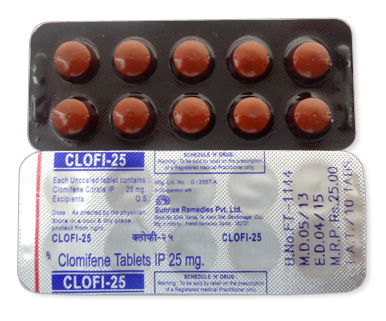
Clomid
- You can buy Clomid from some online pharmacies and international suppliers, and in many countries it is a prescription-only medicine; however, availability without a prescription may vary by seller and local law in Australia.
- Clomid (clomifene/clomiphene) is used to treat ovulatory infertility, especially anovulation and some cases of polycystic ovary syndrome. It works as a selective oestrogen receptor modulator, helping stimulate the release of hormones that trigger ovulation.
- The usual dose is 50 mg once daily for 5 days, usually starting on days 2 to 5 of the menstrual cycle. If needed, the dose may be increased up to 150 mg per day under medical supervision.
- The form of administration is an oral tablet.
- Clomid usually starts working within a few days, but its ovulation-stimulating effect is typically seen during the treatment cycle, around 5 to 10 days after the last tablet.
- The duration of action is short in the body, but its fertility effect lasts through the cycle; treatment is commonly given for 5 days and may be repeated for up to 6 cycles.
- Alcohol is not strictly contraindicated, but it is best to avoid or limit alcohol while taking Clomid, as it may worsen side effects and is not recommended when trying to conceive.
- The most common side effects are hot flushes, abdominal or pelvic bloating, nausea, headache, and ovarian discomfort or enlargement.
- Would you like to try Clomid without a prescription?







Basic Clomid Information
- INN (International Nonproprietary Name): Clomifene
- Brand names available in Australia: Clomid is the best-known name, while local supply may also be dispensed as a generic clomifene or clomiphene citrate product depending on supplier and prescription
- ATC Code: G03GB02
- Forms & dosages: Oral tablets in 25 mg, 50 mg, and occasionally 100 mg scored tablets; no approved creams, vials, or non-oral forms
- Manufacturers in Australia: Supply can vary by distributor; global manufacturers include Sanofi Aventis, EMD Serono, Egis Pharmaceuticals, Hexal/Novartis, and other generic suppliers
- Registration status in Australia: Prescription-only medicine, with access depending on indication and prescriber pathway
- OTC / Rx classification: Prescription only (Rx) in most major markets
Latest Research Highlights On Clomifene
Clomifene remains a core option for ovulation induction, especially when anovulation or PCOS is part of the picture.
Recent 2022 to 2025 evidence continues to show that oral clomifene can trigger ovulation effectively in selected patients, but specialists often compare it with letrozole and, in more complex cases, gonadotropins.
That comparison matters in Australia, where clomifene is still prescription only and is often reviewed through a fertility specialist or GP pathway with PBS-aware decision-making, although access can vary by indication.
The medicine is the INN clomifene, also spelled clomiphene in the US, and it sits in ATC group G03GB02.
Athletes should also note that clomifene is on the WADA Prohibited List, so clearance is needed before use in sport.
| Outcome | What Recent Evidence Shows | Safety Signal |
|---|---|---|
| Ovulation induction | Consistently effective for many patients with ovulatory failure | Ovarian enlargement and discomfort are common |
| Pregnancy outcomes | Pregnancy can follow successful ovulation, with cycle-based use commonly limited | Multiple pregnancy risk remains higher than natural conception |
| Comparison with letrozole | Letrozole is increasingly used off-label in some settings, especially PCOS | Choice depends on response, side effects, and prescriber preference |
| Comparison with gonadotropins | Injectable gonadotropins are often reserved for specialist-managed treatment | Higher monitoring burden and more intensive follow-up |
| Visual symptoms | Uncommon but important to watch for | Blurred vision or spots need prompt review |
- Best supported use is still ovulation induction for anovulation, including PCOS-related infertility.
- Short-course use remains standard because longer exposure is not preferred.
- Safety monitoring stays focused on visual disturbance, ovarian enlargement, and multiple pregnancy risk.
Clinical Effectiveness In Australia: What Patients Can Expect
People usually want to know one simple thing first: “Will this actually help me ovulate?”
In Australian fertility care, clomifene is commonly used when the main issue is ovulatory failure rather than tubal disease or severe male factor infertility.
Typical care involves cycle tracking, review of symptoms, and ultrasound monitoring where available, especially if a fertility clinic is involved.
In general practice or women’s health settings, referral is common when cycles are irregular, the diagnosis is uncertain, or there is no response after a few cycles.
Patients also compare access and price across Chemist Warehouse, Priceline, TerryWhite Chemmart, and online pharmacies, and telehealth e-prescriptions matter more in rural and regional areas.
Data highlight: the usual regimen is a 5-day course, often repeated for up to 6 cycles, and the risk of twins or other multiple pregnancy is higher than with natural conception.
- Most patients are started on a short course rather than continuous therapy.
- Monitoring may include cycle calendars, ovulation timing, and scans if the clinic offers them.
- TGA oversight and local prescribing standards favour cautious use rather than open-ended repeat prescribing.
Indications And Expanded Uses
For most Australian patients, the main reason to use clomifene is ovulatory failure or anovulation.
That includes many people with PCOS who are trying to conceive after lifestyle changes, work-up, and basic fertility counselling.
Some specialists also use it off-label in male infertility or hypogonadism, but that is physician-monitored and not a routine consumer medicine in the way blood pressure tablets are supplied.
- Anovulation
- When the ovaries do not release an egg in a cycle.
- PCOS
- Polycystic ovary syndrome, a common cause of irregular ovulation.
- Off-label use
- Use for a condition or patient group outside the main registered indication, under medical supervision.
Clomifene is not indicated in pregnancy, in children, or for long-term hormone modulation.
Australian clinicians also use caution if there is unexplained uterine bleeding or liver disease.
Many people ask about tablets because they want to avoid injections, and that preference often shapes the first discussion with a GP or fertility doctor.
Composition, Strengths, And Brand Landscape In Australia And Overseas
The active ingredient is clomifene, also written as clomiphene in the US.
Most products are oral tablets in 25 mg or 50 mg strengths, with 100 mg scored tablets available in some markets for dose splitting.
No approved creams, vials, or non-oral forms are listed in the supplied data.
Australian shoppers often recognise Clomid tablets first, then compare generic clomiphene citrate 50mg options if they are trying to reduce out-of-pocket cost.
| Brand Name | Region | Common Packaging |
|---|---|---|
| Clomid | USA, Canada, global | Tablets, 50 mg, blisters |
| Serophene | USA | Tablets, 50 mg, blisters |
| Omifin | Latin America, Europe | Tablets, 50 mg |
| Clostilbegyt | Central and Eastern Europe | Tablets, 50 mg |
| ClomHEXAL | Germany | Tablets |
| Fertomid/Fertin | India and other markets | Tablets |
Supply in Australia can vary by distributor, so a pharmacist may dispense a generic equivalent instead of a branded pack.
That is normal practice when the prescriber allows substitution and the product is therapeutically equivalent.
Contraindications And Special Precautions
Who should avoid clomifene altogether?
That question comes up quickly when someone is keen to start a fertility cycle, but safety has to come first.
| Avoid | Monitor Closely |
|---|---|
| Known hypersensitivity to clomifene or tablet components | PCOS, because of ovarian hyperstimulation risk |
| Current pregnancy | Fibroid uterus |
| Liver disease or abnormal liver function | Visual disturbances during use |
| Unexplained uterine bleeding | Thromboembolic risks |
| Ovarian cysts not due to PCOS | Symptoms such as bloating, pain, or dizziness |
| Pituitary or other hormone-dependent tumours | Ability to drive or operate machinery if vision changes |
Warning: If blurred vision, spots, or any persistent visual change appears, stop and seek advice promptly rather than waiting for the next dose.
That advice is especially important for people in rural areas who may need remote review after starting treatment.
Daily-life caution matters too, because blurred vision or dizziness can make driving, work at heights, or machinery use unsafe.
Dosage Guidelines: Australian-Style Regimen And Dose Limits
The standard starting regimen is straightforward and commonly used across fertility clinics.
For ovulatory failure or anovulation, the usual dose is 50 mg daily for 5 days, started on cycle days 2 to 5.
If needed, the dose may be increased up to 150 mg daily, but local practice remains cautious and short-course use is preferred.
For male infertility or hypogonadism, off-label dosing is often 25 to 50 mg daily under physician supervision.
| Indication | Initial Dose | Typical Maximum | Course |
|---|---|---|---|
| Ovulatory failure/anovulation | 50 mg daily | 150 mg daily | 5 days, starting days 2 to 5, repeat up to 6 cycles |
| Male infertility/hypogonadism | 25 to 50 mg daily | Adjusted by response | Physician-monitored use |
- Children are not indicated.
- Elderly use is uncommon.
- Severe hepatic dysfunction is a contraindication.
- If a dose is missed, take it when remembered unless the next dose is close, and do not double up.
Telehealth e-prescriptions are useful, but they still need follow-up monitoring, especially if scans or bloods are part of the plan.
Rural patients should plan tests around local access so the cycle timing is not missed.
Interactions Overview: Medicines, Supplements, Alcohol, And Practical Risks
There are no major food restrictions in the supplied data, but the practical picture still matters.
Alcohol can be an issue if it worsens nausea, dizziness, or treatment adherence, so it is sensible to keep intake modest while using clomifene.
Australian pharmacists normally review all medicines through e-health systems and ask about fertility medicines, hormones, and supplements that could blur symptom monitoring.
That includes over-the-counter products, herbal supplements, and any other prescribed therapy.
- Tell your doctor if you are using fertility medicines.
- Tell your pharmacist about hormone therapy or any recent prescription changes.
- Tell your clinician about supplements, especially if you are tracking cycles closely.
- Seek urgent review if visual symptoms or severe bloating appear rather than waiting for the next tablet.
Simple medicines review can prevent delays and reduce confusion when more than one clinic is involved.
Cultural Perceptions And Patient Habits In Australia
Australian patients are usually practical about fertility medicine.
They ask about price, ask whether PBS applies, and want clear advice from the pharmacist before they leave the counter or log off the telehealth call.
Urban patients may get to fertility clinics faster, while rural and regional patients often rely on local GPs, telehealth, and pharmacy counselling for the next step.
Major chains such as Chemist Warehouse, Priceline, and TerryWhite Chemmart are common comparison points for stock and generic substitution.
Common patient worries include twins, side effects, privacy, and whether treatment should work “straight away”.
- Price sensitivity is high, so generic substitution is often welcomed.
- People value pharmacist advice because fertility discussions can feel personal and rushed.
- Respectful reproductive health conversations matter for Aboriginal and Torres Strait Islander patients and for migrant communities.
- Privacy and discretion remain important, especially when treatment is linked to trying to conceive.
Availability And Pricing Patterns: Where Australians Buy Clomifene
Clomifene is supplied in Australia as a prescription-only medicine through community pharmacy, fertility clinics, and some online pharmacies that dispense against a valid e-prescription.
In our online pharmacy, clomid is available without a prescription, with discreet delivery to Australia in 5-14 days.
People often compare stock and pricing across Chemist Warehouse, Priceline, and TerryWhite Chemmart, but availability changes with supplier and brand substitution.
| Channel | Typical Convenience | Common Pros and Cons |
|---|---|---|
| Community pharmacy | High in metro areas | Face-to-face counselling, but stock can vary |
| Fertility clinic | Specialist-led | Close monitoring, but may be more expensive |
| Online pharmacy | Convenient for many patients | Delivery is useful, but timing depends on postcode and supply |
| Regional pharmacy | Local access | May need ordering in, which can delay the first cycle |
Patients often ask about Clomid price and whether the medicine is subsidised, and the safest answer is to confirm current dispensing status with the pharmacist at the time of supply.
Urban delivery is usually faster than regional delivery, and limited local stock can add a few days in smaller centres.
Comparable Medicines And Patient Preferences
Many Australians compare clomifene with letrozole, gonadotropins, and metformin before deciding on a fertility plan.
That comparison is normal, because tablets feel simpler than injections and the cost, monitoring burden, and side-effect profile are not the same for every patient.
| Medicine | Route | Main Pros | Main Cons |
|---|---|---|---|
| Clomifene | Oral | Simple dosing, familiar, commonly used for ovulation induction | Multiple pregnancy risk, visual symptoms, ovarian enlargement |
| Letrozole | Oral | Increasingly used off-label, often considered after non-response | Choice depends on clinician preference and patient profile |
| Gonadotropins | Injectable | Specialist option when tablets are not enough | More monitoring, more complex, usually higher burden |
| Metformin | Oral | Adjunct option in PCOS | Not a direct ovulation induction tablet on its own |
Some people move from clomifene to letrozole after side effects or poor response.
Specialists may also choose based on BMI, PCOS phenotype, and the pattern of previous cycles.
That is why the “best” option is usually the one matched to the individual, not the one with the loudest online discussion.
Common Questions About Clomid In Australia
Is Clomifene available in Australia?
Yes, clomifene is available in Australia as a prescription-only medicine, with local stock and brand options varying by supplier.
How long does it take to work?
It is usually taken as a 5-day course early in the cycle, and ovulation response is then tracked over that cycle.
Can I buy it online?
Online dispensing is possible through legitimate pharmacies with valid e-prescriptions and pharmacist counselling, and telehealth scripts are commonly used.
What happens if I miss a dose?
Take it as soon as remembered unless the next dose is close, and do not double the dose.
If vision changes, severe pain, or unusual bloating appear, seek help promptly rather than waiting.
Guidelines For Proper Use
Good pharmacist counselling makes a real difference with fertility medicine.
Patients are usually told to take clomifene exactly as directed, start early in the cycle, and never use it in pregnancy.
Short-course use is standard, and prolonged treatment beyond the recommended cycles is not advised because of the risk profile.
- Store below 25°C in a dry place.
- Keep it out of reach of children.
- Do not use it past the expiry date.
- Stop and seek advice if visual changes persist.
- Keep follow-up appointments for cycle review, scans, or blood tests.
- Confirm PBS or private pricing, delivery options, and monitoring steps before starting.
That final check helps avoid delays, especially when timing matters for the cycle.
Delivery Across Australia
| City | Region | Delivery time |
|---|---|---|
| Sydney | New South Wales | 5-7 days |
| Melbourne | Victoria | 5-7 days |
| Brisbane | Queensland | 5-7 days |
| Perth | Western Australia | 5-7 days |
| Adelaide | South Australia | 5-7 days |
| Canberra | Australian Capital Territory | 5-7 days |
| Hobart | Tasmania | 5-7 days |
| Darwin | Northern Territory | 5-7 days |
| Newcastle | New South Wales | 5-9 days |
| Gold Coast | Queensland | 5-7 days |
| Wollongong | New South Wales | 5-9 days |
| Geelong | Victoria | 5-9 days |
| Townsville | Queensland | 5-9 days |
| Cairns | Queensland | 5-9 days |
| Launceston | Tasmania | 5-9 days |
Final Takeaway
Clomifene remains one of the best-known oral fertility medicines for ovulatory failure, especially when a patient wants a tablet-based option and the prescriber is aiming for short-course treatment.
Its main strengths are familiar dosing, broad international experience, and a place in fertility care that still matters in Australia.
Its main cautions are also clear: it is prescription-only, needs monitoring, can cause visual symptoms or ovarian enlargement, and carries a higher multiple pregnancy risk than natural conception.
For many people, the next step is a simple conversation with a GP, fertility specialist, or pharmacist about access, pricing, and the safest way to start.